
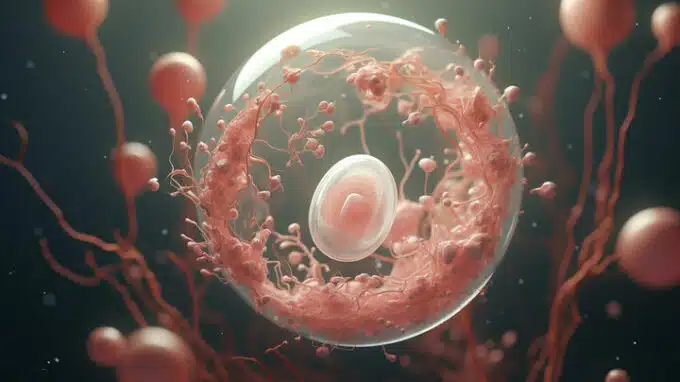
The decline in fertility over the course of a person’s life is a natural biological process observed in both sexes, but particularly pronounced in women. In women, this phenomenon is closely linked to the age of the eggs and the function of the ovaries: Even before birth, the female body forms its entire supply of eggs, which steadily decreases over the course of a lifetime while simultaneously losing quality. This process means that pregnancy becomes more difficult with increasing age, is more frequently accompanied by chromosomal abnormalities, and the risk of miscarriage increases.
Decline in Egg Count and Egg Quality
The root cause of declining fertility lies in the decline in the egg reserve: At birth, a girl has about 1 to 2 million eggs; by puberty, this number is around 300,000; and by the onset of menopause, usually only a few hundred remain. At the same time, the likelihood that an egg will be properly fertilized and divide healthily decreases with each passing year. This is due, in part, to the fact that the mechanisms that hold chromosomes together during meiosis become less reliable with age—which can lead to chromosomal abnormalities, one of the main causes of infertility or genetically caused disorders in the embryo.
New research suggests that a significant decline in fertility can begin as early as age 32, with the rate of decline accelerating further after the mid-30s. One reason for this appears to be the decline in proteins such as cohesin, which are essential for maintaining proper chromosome structure during egg maturation.
The Ovarian “Ecosystem” Influences Fertility
New studies from the U.S. show that it is not only the eggs themselves that age, but the entire ovarian environment—that is, the surrounding cells and tissues—that significantly influences how well eggs mature and how rapidly fertility declines. This so-called “ovarian aging ecosystem” ensures that eggs are no longer optimally developed or supported, which contributes to a rapid decline in fertility. This approach broadens our understanding beyond mere egg quality and suggests that future therapies could also target the overall function of the ovary, not just the egg itself.
Cell Biology Mechanisms: Energy, Stress, and Aging at the Egg Level
In addition to the simple decline in egg number, cellular and molecular aging processes influence the quality of the remaining eggs:
Mitochondria and Energy Production
Egg cells require a large amount of energy to divide and develop properly. With age, mitochondrial function—the “powerhouses” of the cells—often deteriorates, leading to less efficient energy production, increased oxidative stress, and an accumulation of damage. These mitochondrial changes impair the maturation and function of the eggs and thus directly contribute to the decline in fertility.
Inflammatory Processes and Immune Cells

Another newly discovered mechanism involves altered immune processes in the aging ovary. Specific immune cells—including multinucleated giant cells—accumulate in aging tissue and promote a form of chronic, age-related inflammation. This can impair the ovary’s regenerative capacity and contribute to premature functional exhaustion.
“Vascular Aging” and the Supply of Eggs
A relatively new field of research highlights the crucial role played by the age of blood vessels in the ovary: Studies show that vascularization (blood supply) of ovarian tissue decreases with age. However, an adequate blood supply is essential for follicles (the functional units of the ovary that enclose the oocytes) to develop properly. When vascular adaptability declines, follicles receive poorer blood supply, which further impairs egg maturation and, consequently, fertility. Interestingly, natural compounds such as salidroside have been shown in animal models to partially reverse age-related changes in blood vessels, opening up new therapeutic possibilities.
Protein Deficiency in Aging Egg Cells—and New Repair Options
A groundbreaking discovery concerns a protein called Shugoshin 1, whose levels decline as egg cells age. This protein helps keep chromosomes properly aligned, which is essential for error-free cell division. When it is lacking, embryos with an abnormal number of chromosomes are more likely to form—a major cause of miscarriages and IVF failures. Initial experimental studies show that supplementing this protein can nearly halve the risk of such defects. This is a new approach that does not extend natural fertility but could improve the quality of older egg cells and thus increase the chances of pregnancy.
Environmental Factors—Such as Microplastics in the Ovarian Fluid Environment
Recent research shows that environmental factors play a significantly greater role in fertility than previously assumed and are closely linked to the age-related decline in reproductive capacity. Environmental exposures do not act in isolation but rather exacerbate biological aging processes in eggs, sperm, and the surrounding tissues. Particular attention is being paid to so-called endocrine disruptors such as bisphenols, phthalates, PFAS, and certain pesticides. These chemicals can disrupt the endocrine system, impair the maturation of egg cells, and cause the ovarian reserve to age functionally more rapidly. Since exposure is usually low-dose but chronic, the effects accumulate over the years and can accelerate the natural decline in fertility.

Another very new area of research concerns micro– and nanoplastics. Such particles have now been detected for the first time directly in the follicular fluid of human ovaries—that is, in the immediate environment surrounding the egg cell during its maturation. These particles can promote oxidative stress and inflammatory reactions and disrupt hormonal signaling pathways. Even though the long-term effects in humans are not yet fully understood, this finding shows that environmental pollutants can affect the most sensitive reproductive processes not only indirectly but also directly.
Added to this are factors such as air pollution and fine particulate matter, which have been linked to systemic inflammation, altered blood flow to the ovaries, and epigenetic changes in germ cells. Of particular relevance is the fact that aging cells and tissues are less capable of compensating for such environmental stressors. Recent studies therefore refer to “accelerated reproductive aging,” in which environmental factors exacerbate the biological aging of fertility. This interplay helps explain why the decline in fertility varies greatly from person to person and why prevention and environmental factors are becoming increasingly important in modern reproductive medicine.
Therapeutic and Scientific Perspectives
These new insights into the biological mechanisms of age-related fertility decline have direct implications for research and clinical practice:
- Chromosomal structure repair: Pioneering work with proteins such as Shugoshin 1, which improve chromosomal stability, could increase IVF success rates in older women in the future—particularly by reducing the rate of chromosomal abnormalities.
- Molecular therapies: Approaches that specifically target oxidative stress, mitochondrial dysfunction, or vascular aging are the subject of intensive research. In the future, they could help preserve the quality and function of eggs for longer.
- Counseling and family planning: A better understanding of age-related fertility decline enables more personalized counseling—for example, regarding the optimal time to try for a baby or alternatives such as egg cryopreservation for future pregnancies (social freezing is becoming increasingly regulated and accessible in some regions; see the context in Austria).
You may also be interested in...
-

Fertility improvement is a well sought-after goal and one in which natural remedies can play…
-
No decision in life is more far-reaching than the decision to have children. Since many…
-
Eating right, exercising and maintaining a healthy lifestyle are all important for boosting fertility. However,…