
There has always been talk of the biological clock of women and how it gradually ticks away with age, but what about the stronger sex? The fact is, men also have a biological clock—it just works differently than women’s. While women experience a clearly defined point during menopause when fertility abruptly ends, age-related changes in men occur gradually, vary individually, and are not sudden. This is often referred to as andropause, male menopause, late-onset hypogonadism, or in everyday language as a “man’s biological clock.”
What Does the Biological Clock Mean for Men?
Declining Hormone Production
From around age 35–40, the body’s own testosterone production decreases by about 1% per year.
More importantly: free testosterone (the active portion for the body) decreases significantly faster because the SHBG protein increases with age.
This can lead in the long term to:
- Reduced drive
- Loss of libido
- More body fat
- Less muscle mass
- Mood swings
- Slower recovery
—typical symptoms of “male menopause.”
Biological Changes in Fertility
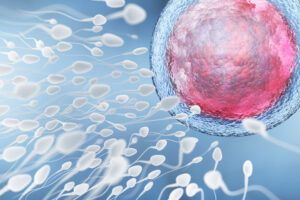
Men remain fertile for a long time, but not indefinitely.
With age, the following increase:
- DNA damage in sperm
- Lower sperm count
- Reduced motility
- Higher miscarriage rates in partners
- Greater risk of genetic changes in the embryo
All of this is an expression of a male “biological clock.”
Psychological and Emotional Changes
Many men report between 40 and 55:
- Self-doubt
- Midlife questions (“Is that it?”)
- Performance pressure
- Fatigue
- Irritability
These changes are partly hormonal, partly psychological — but they follow a time pattern that corresponds to the biological clock.
Changes in Metabolism
With age:
- Basal metabolic rate decreases
- Risk of fat accumulation, especially abdominal fat, rises
- Insulin sensitivity declines
- Recovery slows down
These processes are also linked to decreasing hormone activity.
How Does the Male Biological Clock Differ from the Female One?
| Feature | Women | Men |
| End of fertility | Abrupt (menopause) | No abrupt end; gradual decline |
| Hormone changes | Rapid drop in estrogen & progesterone | Slow decline in free testosterone |
| Symptoms | Strong, short-term, clearly defined | Mild to moderate, slow over years |
| Onset | ~45–55 | ~35–55 |
| Reproductive ability | Ends completely | Usually preserved, but quality declines significantly |
How Does the Male Biological Clock Manifest?
Typical physical signs:

- Fatigue, lower stamina
- Reduced muscle strength
- Loss of libido
- Erectile problems
- Sleep disturbances
- Weight gain (especially abdominal)
Typical mental signs:
- Loss of motivation
- Irritability
- Low stress tolerance
- Reduced self-confidence
- Mood swings
Not every man experiences all symptoms — but the patterns are clearly recognizable.
Why does the Male Biological Clock Tick?
The main biological mechanisms:
- Aging Leydig cells → lower testosterone synthesis
- Rising SHBG → less free testosterone
- Mitochondrial Aging → less energy and recovery
- Inflammatory Processes (“inflammaging”) → delay of many body functions
- Declining DNA Repair in Sperm → weaker fertility
This is a natural process and not a sign of illness—just part of male aging. So it can be said that men do have a biological clock, but it ticks more quietly, slowly, and subtly than women’s. Nevertheless, it is real and well documented scientifically. Instead of an abrupt change, men experience a slow hormonal and reproductive shift that spans decades and often only becomes noticeable at the age of 40–50.
How Men can Positively Influence their Biological Clock
The male biological clock ticks more quietly than the female biological clock, but it is still noticeable. Over time, hormone production, energy levels, fertility, metabolism, and mental stability change. Although the aging process cannot be stopped, men have a surprising number of options for slowing it down, mitigating it, and in some cases even compensating for it. How well the biological clock runs depends less on chronological age than on lifestyle, stress levels, regeneration, nutrition, and mental health.
Many men notice around the age of 40, sometimes even earlier, that strength, libido, and drive are no longer as natural as they were at 25. The decisive factor is how consciously and proactively they deal with these changes. In middle age, the body is particularly sensitive to nutrition, stress, and training stimuli—and this is precisely where the potential lies to significantly slow down the biological clock.
Regular Exercise as a Key Factor
Exercise is one of the most powerful regulators of male hormone balance. Strength training in particular has a long-term stimulating effect on free testosterone levels, muscle mass, and metabolic activity. Men who specifically train their muscles two to four times a week significantly slow down the age-related decline in muscle strength. At the same time, endurance training has a stabilizing effect on the heart, circulation, and mental health. The combination of strength training, moderate endurance training, and everyday exercise is particularly effective: it improves blood circulation, stress resistance, and sleep quality—all factors that have a direct impact on the biological clock.

The important thing is not the intensity, but the regularity. Even moderate training sessions noticeably improve energy, mood, and hormone profile. Exercise acts like the body’s own anti-aging program, which costs nothing and works better the earlier it is started.
Nutrition as the Foundation for Hormones, Metabolism, and Vitality
A balanced diet has an enormous influence on men’s hormonal health. The body needs high-quality fats, proteins, and micronutrients to produce testosterone and maintain cell functions. Omega-3 fatty acids, zinc, magnesium, vitamin D, and antioxidant plant substances from vegetables, berries, herbs, and spices are particularly valuable.
With age, the male metabolism becomes more sensitive to sugar, alcohol, and highly processed foods. These promote inflammation, encourage fat accumulation, and put strain on hormonal regulatory systems. A plant-based diet with sufficient protein, healthy fats, and complex carbohydrates acts as a counterbalance and can support performance, libido, and overall vitality.
Intermittent fasting (e.g., 16:8) is also well tolerated by many men and can stabilize the metabolism without requiring strict diets. It improves insulin sensitivity, relieves the digestive system, and supports the body in repairing deeper cell structures.
Sleep and Regeneration – Underestimated Pillars of Male Health
Sleep is by far one of the most important factors for the male biological clock. Many middle-aged men sleep too little or too restlessly. This leads to an increase in the stress hormone cortisol, which in turn lowers testosterone, promotes fat accumulation, and affects libido, energy, and muscle building.
A stable, regular sleep rhythm acts like a fountain of youth. Even small changes—such as a fixed wake-up time, evening routines, or less screen time before bed—have measurable effects on mood, resilience, and regeneration. At night, the body repairs tissue, regulates hormones, reduces stress, and produces growth hormones, which are especially necessary in old age.
Stress Management as Protection Against Hormonal Exhaustion
Chronic stress is one of the biggest accelerators of the male biological clock. It permanently increases cortisol, impairs sleep, libido, and immune function, and inhibits the body’s own testosterone production. Stress reduction therefore means much more than relaxation—it has a direct effect on the aging process.
Mindfulness, meditation, breathing techniques, walks in nature, or regular breaks help to calm the nervous system. Social contacts, hobbies, and emotional support also play a major role. Stress can accelerate the aging process, but well-regulated stress levels can slow it down noticeably.
Many men also underestimate how much stress from work and responsibilities affects their health. A consciously maintained work-life balance is therefore not a luxury, but an investment in one’s own longevity.
Herbal Support for Hormone Blance and Well-being
Herbal active ingredients can provide additional help when slight changes occur. Adaptogens such as ashwagandha, rhodiola, or ginseng are often used to reduce stress, improve sleep quality, and stabilize energy levels. Plants such as maca, fenugreek, and Tribulus terrestris are particularly valued for their potential effects on libido and vitality.

They are not a substitute for medical therapy, but they can support the subjective well-being of many middle-aged men. A holistic approach is also crucial here: herbal substances work best when diet, exercise, and sleep are already well regulated.
Mental Health and Self-image in Midlife
A man’s biological clock affects not only his body, but also his mind. Between the ages of 40 and 55, many men ask themselves questions about meaning, success, life balance, and the future. Their self-image changes, and their bodies become more sensitive to stress and demands.
This phase also offers opportunities: men who learn to recognize their needs, realign their goals, and promote inner stability emerge from this period significantly stronger. Mental health is an important key to slowing down the aging process because it affects sleep, hormones, stress, and lifestyle choices.
Weight, Body fat, and Metabolism Control
As we age, it becomes more difficult to maintain a stable body weight. Visceral belly fat is particularly dangerous because it is hormonally active and can promote inflammation. It acts as an accelerator of the biological clock—especially for cardiovascular health, metabolism, and libido.
Regular exercise, a healthy diet, good sleep hygiene, and stress reduction help stabilize the metabolism. Even moderate weight loss can improve energy levels and relieve hormonal processes.
Social Relationships and Quality of Life as Anti-aging Factors
Studies show that men with stable social ties—partnerships, friendships, family—age more robustly psychologically. Good social relationships strengthen the immune system, reduce stress hormones, and have a beneficial effect on quality of life and emotional stability.
Loneliness, on the other hand, measurably accelerates the aging process. Regular interaction, mutual support, shared activities, and social integration have a direct influence on the male biological clock.
A Conscious, Slower Lifestyle for a Better Quality of Life
Many men benefit greatly from slowing down their pace of life. Less multitasking, more restful breaks, greater mindfulness of one’s own body, and regular periods without pressure to perform lead to a significant improvement in well-being, energy, and mental clarity.
The middle-aged body is more sensitive to overload, but at the same time responds positively to balance and regeneration. The biological clock cannot be turned back, but its pace can be influenced—often more than many people believe.
You may also be interested in...
-

The term "biological clock" is used to describe increased maternal instincts, particularly women as they…
-
Most men live under the assumption that it is never too late to father a…
-
Women in their 30s and 40s, especially those who don’t already have a child, typically…