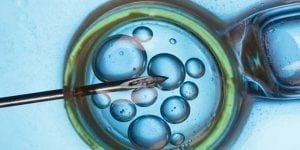

During artificial insemination, hormone injections are used to stimulate the ovaries to mature as many eggs as possible at the same time. However, while some women respond to the stimulation by producing numerous mature eggs, others develop only a few follicles despite high doses of medication. Why is that? What role do age, AMH levels, and egg reserve play? And is it even possible to influence a weak ovarian response?
Why the Ovaries Are Stimulated During IVF
During a natural menstrual cycle, one follicle typically develops more fully than the others. An egg matures inside it and is released during ovulation. With in vitro fertilization (IVF), the process is different. Here, doctors use hormonal stimulation to encourage multiple follicles to grow at the same time. This is usually done with medications that contain the follicle-stimulating hormone (FSH) or mimic its effects.
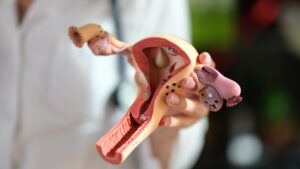
The goal is to retrieve as many eggs as possible so that fertilization can take place in the lab and, ideally, suitable embryos can be created for transfer. However, each ovary reacts differently to this treatment. While ten or more eggs can be retrieved from some women, others yield only two or three. Sometimes, despite stimulation, only one or two follicles develop to a sufficient size. Such a poor response is referred to as a low ovarian response.
The Egg Reserve: How Many Eggs Are Actually Still Available?
One of the most important explanations lies in what is known as the ovarian reserve. This refers to the remaining supply of follicles in the ovaries. Women are born with a limited supply of eggs. Over the course of their lives, this supply continuously decreases. As women age, therefore, fewer and fewer follicles are available that can be stimulated to grow through hormonal treatment.
This means that even if the medications are administered at sufficiently high doses, they cannot produce additional eggs. They can only support the growth of those follicles that are still present at that time and can be stimulated. This relationship becomes particularly clear in women with a diminished ovarian reserve.
AMH Level: An Important Indicator of Ovarian Response
To better assess the expected response to IVF stimulation, fertility clinics often measure the AMH level. AMH stands for anti-Müllerian hormone. It is produced by specific cells in the developing follicles of the ovaries. The level provides an indication of the approximate size of the available follicular reserve. A low AMH level may suggest that fewer eggs could be retrieved following hormonal stimulation. A high level, on the other hand, may indicate a larger follicular reserve and possibly a stronger response.
However, it is important to note that the AMH level does not reliably predict whether a woman will become pregnant. It primarily helps estimate the expected number of developing follicles and the risk of a poor or excessive response. In its AMH guideline updated in 2025, the European Society of Human Reproduction and Embryology (ESHRE) recommends using either AMH or the so-called antral follicle count (AFC) to predict the ovaries’ response to hormonal stimulation.
What Happens if the Ovaries Respond Only Weakly?
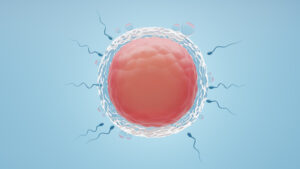
In the case of a low response, fewer follicles than expected develop during the stimulation phase. This can have various consequences:
- Only a few eggs may be retrieved.
- Not every retrieved egg is fully mature.
- Not every mature egg can be successfully fertilized.
- Only a few viable embryos may develop from the fertilized eggs.
This can reduce the likelihood that an embryo will be available for transfer. For affected women, this is often a significant emotional burden. It becomes particularly difficult when they have already undergone several treatment cycles and, despite high expectations, only a few eggs are retrieved time and again. However, a low egg count does not automatically mean that pregnancy is impossible. Under favorable conditions, even a single egg can develop into a viable embryo.
What Role Does Age Play?
Age is one of the most important factors influencing female fertility. As a woman ages, not only does her egg reserve decrease, but the quality of the remaining eggs also changes. Among other factors, changes in chromosome distribution during cell division play a role here. With older eggs, the likelihood of chromosomal abnormalities increases. This can result in fewer eggs being successfully fertilized, embryos ceasing development earlier, or a pregnancy not occurring.
It is therefore important to distinguish between two things: egg count and egg quality are not the same. For example, a younger woman may produce only a few eggs, but these have a good chance of developing. An older woman, on the other hand, may yield several eggs, but these have a higher likelihood of chromosomal abnormalities. The ESHRE guideline therefore explicitly distinguishes between predicting the response to stimulation and predicting a subsequent pregnancy or live birth.
Why Do Some Women Respond Poorly Despite Good Hormone Levels?
A poor response cannot always be explained solely by a low AMH level. Sometimes the baseline values appear normal at first, yet fewer follicles develop than expected during stimulation. One possible explanation lies in the individual sensitivity of the ovaries to the hormones used.
The follicles must respond to FSH signals in order to grow and develop further. How sensitively they respond to these signals can vary from woman to woman. The composition of the existing follicle population also plays a role. Not every small follicle automatically continues to develop under hormonal stimulation. In addition, genetic differences, certain medical conditions, and other biological factors are being investigated. However, the extent to which these factors influence the individual response has not yet been fully clarified.
PCOS: When the Ovaries React Particularly Strongly
The opposite of a low response is an excessive ovarian response. This can occur particularly frequently in women with polycystic ovary syndrome (PCOS). In PCOS, numerous small follicles are often found in the ovaries. At the same time, hormonal changes and impaired insulin regulation can affect follicle development. During IVF stimulation, there is therefore sometimes a risk that a very large number of follicles will develop simultaneously.
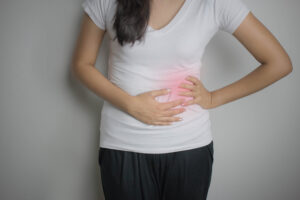
This can increase the risk of ovarian hyperstimulation syndrome (OHSS). Symptoms may include fluid shifts in the body, abdominal pain, and enlarged ovaries. Severe cases can pose a medical risk. For this reason, hormonal stimulation must be individually tailored and carefully monitored.
Can a Higher Hormone Dose Improve the Response?
Many women wonder whether a higher dose of medication could lead to more eggs maturing. While this sounds logical at first, it does not work indefinitely. If only a few stimulable follicles are present, even a significantly higher hormone dose cannot increase the limited supply. The 2025 ESHRE guideline recommends that women with a predicted poor response should not receive a gonadotropin dose exceeding 300 international units per day.
A higher dose therefore does not automatically mean a better yield. Rather, the stimulation protocol should be tailored to the individual’s specific situation. This includes the results of the AMH test, the antral follicle count, and, if applicable, the outcomes of previous IVF cycles.
Are There Ways to Improve the Ovarian Response?
This question is on the minds of many women, especially if a previous IVF treatment did not yield the hoped-for number of eggs. Medical research is exploring various approaches to improve ovarian response. These include modified stimulation protocols and additional medications. However, not all frequently advertised adjunctive treatments are sufficiently supported by scientific evidence.
For example, the ESHRE guideline does not recommend the routine administration of DHEA in women with a poor response. Additional growth hormone treatment is also not generally recommended. The guidelines also do not make a general recommendation regarding testosterone prior to stimulation. Furthermore, there is no evidence that dietary supplements can restore a diminished egg reserve. It is therefore advisable to seek individualized counseling at a fertility clinic. During this consultation, it should also be assessed whether the current stimulation protocol is appropriate for the actual ovarian response.
What Does a Low Egg Count Mean for the Chances of Pregnancy?
A low egg count can limit the chances of success with IVF treatment. However, it by no means means that pregnancy is impossible. The decisive factor is not only how many eggs are retrieved, but also:

- How many of them are fully mature.
- How many are successfully fertilized.
- How the resulting embryos develop.
- The woman’s age and any other health factors involved.
The prognosis must therefore always be considered on an individual basis. Even women who produce only a few eggs can sometimes obtain a viable embryo and become pregnant. A poor response should therefore not automatically be regarded as a failed treatment attempt.
It’s Not Just the Hormone Dose That Matters
There is no single factor that explains why some women respond significantly worse to IVF stimulation than others. The egg reserve, the individual sensitivity of the ovaries, and the initial biological condition all play an important role. Age also influences egg quality and subsequent pregnancy prospects. AMH levels and antral follicle count can help better assess the expected response. However, they do not guarantee treatment success.
For women with a low ovarian response, one thing is particularly important: a higher hormone dose is not automatically the solution. What matters most is a treatment plan tailored to the individual and a realistic assessment of personal chances. After all, even a small number of eggs can lead to a pregnancy.
You may also be interested in...
-

Scientists are advancing their studies of in vitro fertilization. New studies replace part of the…
-
When ruling out possible causes of failed IVF among women, doctors have made headway in…
-
PCOS is a condition affecting women of childbearing age that is responsible for almost a…