

More and more women are being diagnosed with breast cancer at a young age—often at a stage in life when family planning, the desire to have children, or another pregnancy are major priorities. For many of those affected, this creates an additional emotional burden on top of the cancer diagnosis: the worry that they may no longer be able to have children after treatment. In fact, certain breast cancer treatments can affect fertility. At the same time, options for preserving fertility have improved significantly in recent years. New research findings show that many younger breast cancer survivors are still able to become pregnant later on and have healthy children.
Breast Cancer Itself Usually Does Not Cause Infertility
The disease itself generally does not directly affect fertility. Breast cancer does not typically affect organs such as the uterus or fallopian tubes, nor does it directly attack the ovaries. Rather, the problem lies with many of the cancer treatments used, which can affect the egg reserve or hormone production.
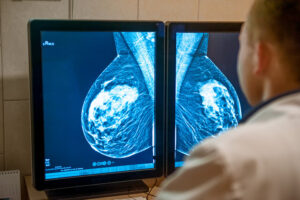
The extent to which fertility is affected depends on various factors. These include age, general reproductive health, existing conditions such as endometriosis or polycystic ovary syndrome, as well as lifestyle factors such as smoking or severe obesity. Previous difficulties in becoming pregnant also play a role.
Age is particularly crucial in this regard. Women under 35 usually have a larger egg reserve and therefore often have a better chance of becoming pregnant after cancer treatment than older patients.
Why Chemotherapy Can Jeopardize Fertility
Chemotherapy in particular can impair the fertility of young breast cancer patients, as many drugs attack not only cancer cells but also healthy cells with a high division rate. This includes the sensitive follicles in the ovaries that contain immature eggs. Women are born with a limited number of such eggs. If these are damaged by treatment, the so-called ovarian reserve can be permanently reduced.
Certain chemotherapy drugs, such as alkylating agents—including cyclophosphamide—are considered particularly problematic. These drugs can damage the DNA of the eggs and disrupt the normal maturation of the follicles. At the same time, the production of important hormones such as estrogen may decline, which directly affects the menstrual cycle and fertility. During treatment, many women initially notice changes in their cycle. Menstruation may become irregular or stop entirely for periods of time. Some patients also experience symptoms reminiscent of menopause, including hot flashes, sleep problems, mood swings, or vaginal dryness. In some cases, ovarian function recovers after treatment is completed; in others, the damage is permanent.
Particularly feared is what is known as primary ovarian insufficiency (POI). In this condition, the ovaries partially or completely cease functioning before the age of 40. The consequences can include absent ovulation, hormonal changes, and reduced or absent fertility. In addition, early estrogen deficiency can have long-term effects on bones, the cardiovascular system, and overall health. How high the risk actually is depends on several factors. The patient’s age plays a decisive role. Younger women usually have a larger egg reserve and can sometimes compensate for damage better than older patients. Women over 35, on the other hand, are more likely to face an increased risk of permanent impairment of ovarian function.
The type, dosage, and combination of the medications used are also important. Higher doses of chemotherapy or the use of multiple active ingredients simultaneously increase the strain on the ovaries. Additionally, the duration of treatment plays a role. Some modern treatment regimens are now considered less harmful to fertility than older forms of treatment. The good news, however, is that many younger breast cancer patients can become pregnant later on despite chemotherapy. Studies show that the majority do not develop permanent primary ovarian insufficiency. In recent years, various strategies have also been developed to better protect the ovaries. These include, among other things, the temporary suppression of ovarian function with so-called GnRH agonists during chemotherapy. These medications put the ovaries into a sort of hibernation mode and may thereby partially protect the sensitive follicles from damage.
Hormone Therapy Can Delay Family Planning
So-called endocrine or anti-hormonal therapy can also complicate family planning. Medications such as tamoxifen are frequently used in hormone receptor-positive breast cancer to prevent recurrence. Treatment often lasts five to ten years.
While the drugs do not directly damage the ovaries, they can alter the menstrual cycle and make pregnancy impossible during therapy. As a result, family planning is often postponed by several years—a period during which natural fertility continues to decline due to age.
The so-called POSITIVE study therefore received particular attention. It showed that many women with early-stage hormone receptor-positive breast cancer can temporarily interrupt their hormone therapy to become pregnant without facing an increased risk of recurrence in the short term. Numerous participants were able to successfully have children during this break.
Radiation Therapy Usually Has Only Minor Effects
In contrast to chemotherapy, radiation therapy for breast cancer is generally considered relatively gentle in terms of fertility. The main reason for this is that radiation is usually targeted specifically at the breast, the chest wall, or surrounding lymph node areas. The ovaries are located far from the actual radiation field, so they are generally exposed to only minimal scattered radiation.

For this reason, many women do not experience a direct impairment of ovarian function following breast radiation. The menstrual cycle, hormone production, and egg reserve are often preserved—especially in younger patients. Unlike certain types of chemotherapy, radiation to the breast does not typically lead to premature loss of ovarian function. Nevertheless, the actual impact always depends on several factors. These include, among others, the patient’s age, the total radiation dose, the combination with other cancer treatments, and overall reproductive health. Fertility may be more severely affected overall, particularly when chemotherapy or anti-hormonal therapy is also administered. The situation is different when the ovaries themselves must be irradiated—for example, in cases of certain gynecological tumors, colorectal cancer, or lymphomas in the pelvic region. In these cases, radiation can directly damage the sensitive follicles and eggs. Since women are born with a limited number of eggs, high-dose radiation can lead to permanent loss of ovarian function.
The consequences range from hormonal changes and menstrual cycle disorders to what is known as premature menopause. Particularly high doses of radiation can cause the ovaries to stop producing mature eggs, resulting in permanent loss of fertility. Although younger women often have a larger egg reserve and may be better able to compensate for some damage, they are not completely protected either. In addition, radiation to the pelvic area can affect not only the ovaries but also the uterus. Scarring, reduced blood flow, or changes in the uterine lining can later make it difficult for an embryo to implant or increase the risk of miscarriage and premature birth. For this reason, doctors discuss potential risks to fertility with women of childbearing age even before radiation therapy begins. If damage to the ovaries is expected, fertility preservation measures such as freezing eggs or ovarian tissue may be considered.
Pregnancy After Breast Cancer: Often Possible
After completing treatment, many women wonder whether pregnancy is still safe. Several studies now show that many younger breast cancer survivors can become pregnant later on, and the majority give birth to healthy children.
However, when pregnancy is recommended depends on the individual’s risk of recurrence, the type of cancer, and the treatment plan. Many doctors recommend waiting about two years after completing treatment, as the risk of an early recurrence is often highest during this period. However, the decision should always be discussed individually with oncologists and fertility specialists.
Options for Fertility Preservation
Today, young breast cancer patients have several options available to preserve their fertility before starting treatment. Experts therefore recommend addressing this issue as early as possible after diagnosis. Among the most established methods is the freezing of eggs or embryos. In this process, the ovaries are first hormonally stimulated so that several mature eggs can be retrieved. The eggs are then either frozen unfertilized or preserved as embryos after fertilization.

These procedures are now considered standard methods for fertility preservation. Success depends, among other factors, on the patient’s age as well as the number and quality of the frozen eggs. For women who must begin cancer treatment immediately, cryopreservation of ovarian tissue may also be an option in some cases. In this process, tissue is removed from the ovary, frozen, and reimplanted after treatment. In addition, so-called GnRH agonists can be used. These medications temporarily put the ovaries into a sort of hibernation mode during chemotherapy and could thereby help reduce damage to the egg reserve.
Previously, there were concerns that measures to preserve fertility might delay cancer treatment or increase the risk of recurrence. However, recent studies show that this is not the case for most patients. Even the short-term increase in estrogen levels during hormonal stimulation does not appear to pose a significantly increased risk, even in cases of hormone receptor-positive breast cancer, according to current data. Nevertheless, every decision is made on an individual basis and in close consultation with oncologists.
Emotional Stress and Social Disparities
For many young women, concerns about fertility are among the emotionally most difficult consequences of a breast cancer diagnosis. Studies show that the fear of infertility can even influence treatment decisions, quality of life, and psychological distress.
Financial problems also come into play. Fertility preservation measures are often expensive and are not always fully covered by health insurance. Women without adequate insurance or with lower incomes therefore often have poorer access to such treatments.
The situation can also be psychologically stressful. Many patients must make decisions regarding their future family planning within a few days of diagnosis. Professional societies therefore recommend psychological counseling and reproductive medical care even before cancer treatment begins.
Why Talking to Your Doctor Is So Important
Experts emphasize that women who wish to have children should address their fertility as soon as possible after diagnosis—ideally even before treatment begins. Even if doctors do not bring up the topic on their own, patients should actively voice their concerns. Today, oncologists often work closely with fertility preservation specialists. Together, they can assess individual risks, discuss suitable options, and help patients make an informed decision. Thanks to modern therapies and new research findings, significantly more young breast cancer patients now have the opportunity to start a family or fulfill their desire to have children after their illness.
You may also be interested in...
-

A diagnosis of ovarian cancer can make conceiving difficult for women who want to have…
-
With proper management and medical monitoring, a diagnosis of breast cancer might not severely inhibit…
-
Fertility is the natural capacity to conceive a child. For some women, conceiving without the…