

When couples are planning a pregnancy, it is helpful to know the most important fertility indicators. These provide clues as to when the fertile phase occurs, how well the cycle is functioning, and whether there are any possible indications of hormonal or health problems. Five key indicators are:
Menstrual Cycle – the Basis of Fertility
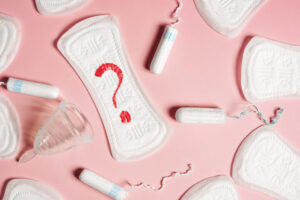
The menstrual cycle is the most important overall indicator of female fertility. A normal cycle lasts about 21 to 35 days. The exact length is less important than the regularity.
The cycle consists of two main phases:
Follicular phase (first half of the cycle): Under the influence of follicle-stimulating hormone (FSH), a follicle matures in the ovary. Estrogen levels rise and the uterine lining builds up.
Luteal phase (second half of the cycle): After ovulation, the corpus luteum produces progesterone. This hormone prepares the uterine lining for possible implantation. The luteal phase should last about 12 to 14 days.
Very irregular, extremely short, or long cycles can indicate hormonal disorders, thyroid problems, PCOS, severe underweight, or stress. A regular cycle usually indicates ovulation, but does not guarantee it in every case.
Ovulation – a Key Event for Pregnancy
Without ovulation, natural conception is not possible. Ovulation is triggered by a sharp rise in luteinizing hormone (LH). It typically occurs about 12 to 16 days before the next menstruation.
The egg cell is only capable of being fertilized for about 12 to 24 hours. However, sperm can survive in the female body for up to five days. Therefore, the fertile window is already in the days before ovulation and ends on the day of ovulation.
Some women notice ovulation through slight unilateral lower abdominal pain (mittelschmerz) or changes in cervical mucus.
Cervical Mucus – a Natural Fertility Indicator
Cervical mucus is produced in the cervix and changes throughout the cycle under the influence of hormones. After menstruation, there is often little or no mucus. As ovulation approaches, it becomes increasingly clear, smooth, and stretchy – often described as “egg white-like.” This phase signals high fertility.
Fertile cervical mucus:
- protects sperm from an acidic environment
- provides them with nutrients
- facilitates their journey to the egg
A lack of mucus or persistently very thick mucus can be influenced by hormonal imbalances, smoking, dehydration, or certain medications.
Basal Body Temperature – Confirmation of Ovulation
The basal body temperature is the body temperature immediately after waking up, before getting out of bed. After ovulation, it rises slightly (by about 0.2 to 0.5 °C) due to the hormone progesterone. A typical temperature curve shows two phases: lower values before ovulation and higher values after.
It is important to note that the temperature confirms ovulation retrospectively. It is less suitable for prediction, but shows that ovulation has taken place. Lack of sleep, infections, alcohol, or stress can influence the values.
Sperm Quality – The Male Factor

About one-third of all fertility problems mainly concern the male factor. A semen analysis examines:
- Concentration (number of sperm)
- Motility
- Shape (morphology)
- Volume and composition of the ejaculate
Impaired sperm quality can be influenced by smoking, obesity, stress, exposure to heat, infections, or hormonal disorders. Since sperm maturation takes about 70 to 90 days, lifestyle changes only take effect after a few months.
Other Influencing Factors
In addition to these five main indicators, the woman’s age (especially from 35 years onwards), body weight, chronic stress, hormonal disorders, the patency of the fallopian tubes, and the structure of the uterus also play an important role.
Women are born with a limited number of eggs, and this so-called ovarian reserve decreases continuously over the years. Not only does the number of eggs decrease, but so does their quality. Fertility begins to decline slowly from around the age of 30, and this process accelerates significantly from the age of 35. With increasing age, the risk of miscarriage and chromosomal changes also increases. Even with a regular cycle, the egg reserve may already be limited without this being outwardly apparent.
Body weight also plays a key role. Being severely underweight can cause the body to suppress ovulation because it classifies pregnancy as a strain in terms of energy. In such cases, ovulation remains irregular or stops altogether. Being overweight, on the other hand—especially with increased abdominal fat—has a negative effect on hormone balance. Fat tissue is hormonally active and can alter the balance between estrogen, insulin, and other hormones. This promotes cycle disorders, insulin resistance, and diseases such as polycystic ovary syndrome. Even moderate weight regulation can measurably improve fertility.

Chronic stress also affects reproductive ability. Stress influences the release of important reproductive hormones via hormonal control centers in the brain. In stressful situations, the body prioritizes survival and energy supply—not reproduction. Prolonged stress can therefore delay or prevent ovulation, shorten the second half of the cycle, and also impair sperm quality.
Short-term stress is usually not a problem, but prolonged stress can significantly reduce the likelihood of conception. Hormonal disorders are another important influencing factor. Thyroid dysfunction—both hyperthyroidism and hypothyroidism—can contribute to cycle irregularities and miscarriages.
Polycystic ovary syndrome is a common cause of absent or infrequent ovulation and is often accompanied by elevated male hormones and insulin resistance. Elevated prolactin levels can suppress ovulation, while luteal insufficiency — insufficient progesterone production after ovulation — can make implantation difficult. Such disorders can usually be detected through specific hormonal tests.
Anatomical conditions are also crucial. The fallopian tubes must be unobstructed so that the sperm and egg can meet. Inflammation, previous infections, endometriosis, or surgery can lead to adhesions or blockages. Even with normal ovulation and good sperm quality, fertilization is then not possible. In addition, the uterus must provide a suitable environment for implantation. Benign changes such as fibroids or polyps, adhesions, congenital malformations, or severe endometriosis can make implantation difficult or increase the risk of miscarriage.
When Should a Medical Examination be Carried Out?
- Under 35 years of age: after about 12 months without pregnancy
- Over 35 years of age: after about 6 months
- In cases of severely irregular cycles or known pre-existing conditions, even earlier
You may also be interested in...
-

Having a baby is a special time for many couples. For some couples, having a…
-
Understanding how infertility affects both women and men is key to knowing that such things…
-
The road to conception and the eventual transition to parenthood requires serious preparation and significant…