
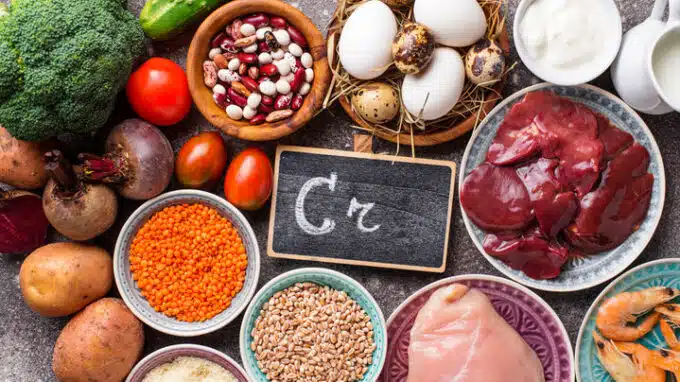
Chromium is an essential trace element that plays a key role in the body’s carbohydrate and fat metabolism. Its importance for fertility does not stem from a direct effect on egg cells or sperm, but rather from its influence on insulin and hormone balance. It is precisely this indirect pathway that is relevant for many people with fertility problems.
The Central Mechanism: Insulin and Hormones
Insulin is not only a blood sugar hormone, but also has a strong effect on hormonal balance. When cells respond poorly to insulin (insulin resistance), the body produces more insulin. Chronically elevated insulin levels can in turn disrupt the production of sex hormones.
Chromium can improve the effect of insulin on cells by supporting the signal transmission of the insulin receptor. This means that less insulin is needed to achieve the same effect. A more stable insulin level has a positive effect on other hormone systems—and this is precisely where the potential benefit for fertility lies.
Effect on Female Fertility
This connection has been particularly well studied in women, especially in connection with polycystic ovary syndrome (PCOS). PCOS is often associated with insulin resistance. The excess insulin stimulates the ovaries to produce more androgens (male hormones such as testosterone). These, in turn, can suppress ovulation or make it irregular.
By improving insulin sensitivity, chromium can indirectly help to lower androgen levels. Some studies have shown that women with PCOS who take chromium supplements develop more stable insulin levels, sometimes more regular cycles, and in some cases improved ovulation. However, these effects are usually moderate and do not occur in all affected individuals.
Even independently of PCOS, balanced sugar metabolism can be important because severe blood sugar fluctuations can impair the delicate balance between estrogen, progesterone, and LH/FSH. Chromium can have a supportive effect here, but it is not a substitute for hormone therapy if there is a clear disorder.
Effect on Male Fertility
The data available for men is less extensive, but the underlying mechanism is similar. Impaired sugar metabolism and chronically elevated insulin levels are associated with:
- reduced testosterone production
- poorer sperm quality
- increased oxidative stress in the testicular environment
Chromium can indirectly help here by stabilizing the metabolism. Better glucose balance supports testosterone production and creates more favorable conditions for spermatogenesis. Individual studies and observations suggest that sperm motility and vitality can improve, but these results have not yet been conclusively confirmed.
It is important to note that chromium does not have a hormonal effect in the traditional sense and does not directly increase testosterone. It merely creates metabolic conditions under which the body’s own hormone production can function better.
Chromium: Dosage, Safety, and Classification
Studies have mostly used doses between 100 and 400 micrograms of chromium per day, often in the form of chromium picolinate or chromium yeast. These amounts are considered safe in the short term. However, long-term high-dose intake should not be undertaken without medical supervision, as actual chromium requirements vary greatly from person to person and deficiency is rare in industrialized nations. Chromium can be absorbed in moderate amounts through diet. However, the effect of diet alone on fertility is usually minimal. Minimally processed plant-based foods are particularly rich in chromium. These include, above all:
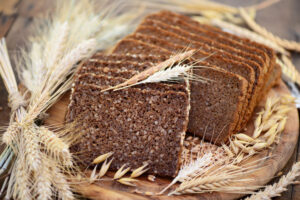
Whole grain products provide more chromium than milled flours because chromium is mainly found in the outer layers of the grain. White flour products are therefore almost chromium-free. Oats, millet, and barley also score well in this regard. Legumes such as lentils, chickpeas, and beans are also relevant sources of chromium. They combine chromium with fiber, which additionally improves insulin sensitivity—a nice synergistic effect.
Vegetables provide lower absolute amounts in comparison, but broccoli, green beans, spinach, and mushrooms stand out. Broccoli in particular is often mentioned because it contains relatively consistent amounts of chromium. Nuts and seeds also contribute to chromium intake, especially hazelnuts, walnuts, and sunflower seeds. Brewer’s yeast occupies a special position. It is one of the most concentrated natural sources of chromium and has even been used therapeutically in the past—however, not everyone tolerates it well.
Food vs. Supplements—Which Makes More Sense?
Chromium from food acts more slowly but more physiologically. It comes embedded in a matrix of fiber, phytochemicals, and micronutrients, which together improve insulin metabolism. Supplements have a more targeted effect, but also a more isolated one. For many people who want to have children, the most sensible approach is therefore:
- First, make your diet chromium-friendly
- Avoid blood sugar spikes
- Only consider supplements if you have a clear insulin problem or PCOS
Conclusion
Chromium is not a fertility vitamin in the strict sense. It does not directly improve egg quality or sperm count. Its potential benefit lies in mitigating metabolism-related hormone imbalances, especially in cases of insulin resistance or PCOS. In such cases, it can be a useful part of a larger overall concept that includes diet, exercise, stress reduction, and, if necessary, other micronutrients.
You may also be interested in...
-

Oysters, champagne and chocolate have long been at the top of most couples' lists when…
-
Fertility issues among both men and women are quite common. But there's reason to believe…
-
You may have heard of a new way of improving fertility through the use of…