

Air pollution has long been considered one of the most significant environmental factors affecting human health. While its effects on cardiovascular and respiratory diseases are well documented, reproductive health is increasingly becoming a focus of research. A recent study, presented at the 42nd Annual Meeting of the European Society of Human Reproduction and Embryology (ESHRE) and published in the journal Human Reproduction, now provides new evidence that air pollutants may influence the development of male sperm at the molecular level.
The scientists found evidence that exposure to various air pollutants during sperm formation is associated with changes in what is known as DNA methylation in sperm. These changes could have an impact on fertility as well as, potentially, on the early development of an embryo. The authors emphasize, however, that further research is needed to clarify the actual health consequences of these changes.
One of the Largest Studies on This Topic to Date
For the study, researchers analyzed data from more than 2,000 men who were examined in Salt Lake City, Utah, between 2013 and 2017. The participants provided semen samples at the start of the study and again after two, four, and six months.

For the actual analysis, samples were ultimately available from 1,220 men who had provided a semen sample even after six months. This allowed the researchers to examine changes throughout the entire process of sperm formation, which takes about three months and is known as spermatogenesis. At the same time, the participants’ exposure to various air pollutants during this period was calculated. The following were taken into account, among others:
- Ozone (O₃)
- Nitrogen dioxide (NO₂)
- Sulfur dioxide (SO₂)
- Fine particulate matter (PM2.5)
The scientists then compared the pollutant exposure with the molecular changes in the sperm.
What is DNA Methylation?
The study focused on a process known as DNA methylation. This is a form of epigenetic regulation. Unlike genetic mutations, it does not alter the DNA sequence itself but influences which genes are turned on or off. These chemical marks play an important role in numerous biological processes, including:
- sperm development
- cell division
- DNA repair mechanisms
- early embryonic development
Since epigenetic changes can sometimes affect subsequent cell generations, scientists are increasingly interested in how environmental factors influence these processes.
39 Changes in DNA Methylation Discovered
The analysis revealed a total of 39 changes in DNA methylation associated with exposure to mixtures of air pollutants. The associations were particularly clear for:
- Ozone (O₃)
- Nitrogen dioxide (NO₂)
These two air pollutants are primarily generated by road traffic, combustion processes, and emissions from industry and heating systems, and occur in elevated concentrations, particularly in urban areas.
The observed changes involved genes that are involved in the following biological processes, among others:
- Spermatogenesis (sperm formation)
- Chromosome organization
- Cell development
- Cellular quality control
- Early embryonic development processes
Special Focus on the GNAS Gene
A particularly interesting finding of the study concerns the so-called GNAS gene. This is what is known as an imprinted gene. These genes are of special biological significance because they play an important role during early embryonic development, and their activity depends on whether they were inherited from the father or the mother. Previous studies had already described associations between changes in this gene and reduced sperm quality. The current study now shows that air pollution may be associated with changes in the DNA methylation of this gene. However, it is not yet clear whether this actually leads to health consequences.

Study leader Dr. Carrie Nobles explained that the results suggest that air pollution during critical phases of sperm development may be linked to changes in DNA methylation. The findings regarding the GNAS gene are particularly significant. Since so-called imprinted genes can be preserved during early embryonic development, this raises the important question of whether environmental exposures affecting the father might not only influence his fertility but could also potentially have an impact on pregnancy and the health of his offspring. However, the researcher also emphasized that further studies are needed to conclusively prove these associations.
Air Pollution as a Complex Mixture of Pollutants
According to the researchers, air pollution consists of a wide variety of pollutants, the composition of which varies depending on the season, weather conditions, and region. Nitrogen dioxide and ozone, in particular, frequently occur in higher concentrations in cities. The main sources are:
- Road traffic
- Fossil fuel combustion
- Natural gas heating systems
- Industrial facilities
Since people are exposed to these pollutants on a daily basis, research into their potential effects on reproductive health is becoming increasingly important.
What is the Significance of these Findings?
Previous studies had already provided evidence suggesting that air pollution might be linked to lower sperm quality. However, the new study goes a step further. Instead of merely examining sperm count or motility, the scientists analyzed, for the first time on a large scale, molecular changes within the sperm themselves. As a result, the study provides a possible biological mechanism that could explain why air pollution may impair male fertility.
Despite the interesting findings, the authors caution against drawing premature conclusions. The study merely shows statistical correlations between air pollution and changes in DNA methylation. However, it does not prove that air pollutants directly cause these changes or that they actually result in health consequences. Other factors such as diet, lifestyle, occupational stress, or other environmental factors could also have influenced the results. Likewise, the study did not examine whether the observed epigenetic changes actually lead to reduced fertility or health problems in children.
Experts See Another Piece of the Puzzle
Karen Sermon, former president of the European Society of Human Reproduction and Embryology (ESHRE), described the study as an important building block for understanding how environmental pollution might affect human reproduction. In recent years, numerous scientific studies have provided evidence that long-term exposure to air pollution may be associated with reduced fertility in both women and men. For example, various studies have observed, among other things, a link between higher levels of air pollution and lower sperm quality, a longer time to conception, and an increased risk of miscarriage and certain pregnancy complications. However, the biological mechanisms underlying these associations are still only partially understood.
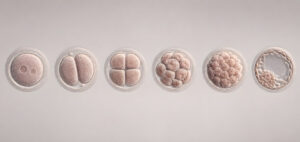
This is precisely where the current study comes in. While earlier studies primarily examined the effects on sperm count, motility, or shape, the researchers have now analyzed changes at the molecular level. The observed changes in DNA methylation could explain how air pollutants influence sperm function and may even affect embryo development before fertilization occurs. Of particular interest is the fact that some of the affected genes play an important role in early embryonic development. Should these epigenetic changes prove to be biologically significant in future studies, this could help explain why environmental exposures affecting the father influence not only his own fertility but also, potentially, the course of a pregnancy and the health of his offspring. Whether and to what extent these changes actually have clinical consequences must now be investigated through further studies.
Further Research Needed
The authors view their findings as a starting point for further investigation. Future studies should clarify
- whether the changes in DNA methylation are permanent,
- whether they actually affect male fertility,
- what effects they have on pregnancies,
- whether the health of offspring could be affected,
- and what role indoor air pollution or individual personal exposure plays.
Conclusion
The new study provides compelling evidence that air pollution may be associated with changes in DNA methylation in human sperm. Ozone and nitrogen dioxide, in particular, were linked to epigenetic changes in genes that are important for sperm development and early embryonic development.
Although the results do not provide direct evidence of effects on fertility or the health of future children, they underscore the growing importance of environmental factors for reproductive health. Further studies will now need to determine whether the observed molecular changes actually have long-term consequences for men, pregnancies, and future generations.
You may also be interested in...
-

Studies show that sperm counts have decreased massively in recent years. Many factors can play…
-
Male fertility problems are frequently the cause of conception problems. As many as 15 percent…
-
If your partner has been told he has a low sperm count, there are ways…