
Endometriosis can make it difficult to conceive—but it appears that the location of the endometriosis within the body also plays a role. A recent study shows that different forms of the disease do not affect ovarian reserve in the same way. In particular, for endometriosis affecting the ovaries, the researchers found evidence of a lower number of available eggs and poorer embryo quality. The findings could be important for women trying to conceive, as they show that a diagnosis of “endometriosis” alone is not sufficient to assess its impact on fertility. The exact form and location of the disease may also be crucial. Endometriosis is not always the same
The Ovaries are a Particular Focus
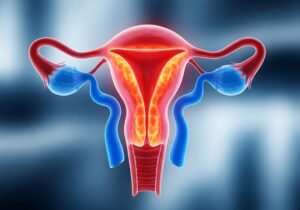
In endometriosis, tissue similar to the uterine lining grows outside the uterus. It can settle, among other places, on the peritoneum, on the ovaries, or in deeper layers of pelvic tissue. Doctors distinguish between different forms of the condition. In superficial or peritoneal endometriosis, the lesions are primarily located on the peritoneum. In ovarian endometriosis, on the other hand, so-called endometriomas often develop on the ovaries. These are cysts filled with old blood, colloquially referred to as “chocolate cysts.” Another form is deep-infiltrating endometriosis. In this case, the lesions penetrate deeper into the tissue and can affect, for example, the intestinal wall, the bladder, or other structures in the pelvis. All of these forms can cause symptoms. However, when it comes to fertility, it appears to make a difference which structures are affected.
For the current study, researchers examined 205 women with laparoscopically confirmed endometriosis who underwent follicular aspiration as part of fertility treatment. The researchers categorized the patients according to the form of their endometriosis and compared, among other things, the number of antral follicles, the number of retrieved eggs, the maturation of the eggs, and the quality of the resulting embryos. This revealed a striking difference between the various groups.
Women with ovarian endometriosis had, on average, fewer antral follicles than women with superficial endometriosis. The group with endometriosis affecting the ovaries also fared worse in terms of the number of retrieved oocytes. Among the women with endometriomas who were examined, the lowest fertilization rates and embryo scores were also observed. The difference in embryo quality on the fifth day of development was statistically significant. The results thus suggest that the ovarian form of endometriosis, in particular, can influence the conditions for fertility treatment.
What Does This Mean for Ovarian Reserve?
Put simply, the so-called ovarian reserve describes how many eggs are still present in the ovaries. It naturally declines with age. However, in women with endometriosis, it may be further compromised.
This association has long been the subject of research, particularly in relation to endometriomas. A recent systematic review from 2026 also concludes that ovarian reserve may be compromised, especially in women with ovarian endometriomas. Factors used to assess ovarian reserve include, among others, anti-Müllerian hormone (AMH), the number of antral follicles detected by ultrasound, and the ovaries’ response to hormonal stimulation.
However, the new study also showed that the AMH level alone did not reveal any significant difference between the various forms of endometriosis. Other parameters, such as the number of antral follicles and the actual number of retrieved oocytes, showed more pronounced differences. This is an important point: A single value cannot fully reflect a woman’s overall fertility.
Why Can Endometriomas be Problematic?
It is not yet fully understood why endometriosis affecting the ovaries in particular might have a greater impact on ovarian reserve. Endometriomas can alter the tissue of the affected ovary. Added to this are chronic inflammatory processes and changes in the local environment. This can impair the normal function of the ovarian tissue. Treatment also plays a role. While surgically removing an endometrioma allows the diseased tissue to be treated, there is also a risk that healthy ovarian tissue will be damaged during the procedure.
A large study involving more than 3,500 women who underwent IVF or ICSI treatment in 2026 also found an association between prior removal of an endometrioma and a lower ovarian reserve. Women who had undergone such surgery had, among other things, lower AMH levels and a smaller number of retrieved eggs than women with untreated endometriomas.
This does not mean that surgery is inherently wrong. It can be medically justified for certain symptoms or findings. However, for women hoping to conceive, the potential benefits of the procedure and its possible effects on ovarian reserve must be carefully weighed.
And What About deep-infiltrating Endometriosis?
Interestingly, the current study did not find the same changes in every form of endometriosis. Women with deep-infiltrating endometriosis also showed a lower number of antral follicles than women with superficial endometriosis. However, the most pronounced differences in ovarian reserve and embryo quality were observed in ovarian endometriosis. The results for the superficial and deep-infiltrating forms could not be replicated in the same way.
However, this should not be confused with the claim that deep-infiltrating endometriosis has no impact on fertility. Depending on their location and severity, endometriotic lesions can, for example, cause adhesions or alter the pelvic anatomy. Pain during sexual intercourse or other symptoms can also indirectly affect a woman’s ability to conceive. The effects therefore vary greatly from person to person.
Endometriosis Does Not Automatically Mean Infertility
An endometriosis diagnosis by no means means that a woman cannot have children. Even with endometriosis, many women become pregnant spontaneously or have a child with the help of fertility treatment.
However, the condition can reduce the likelihood of pregnancy. A recent review on fertility preservation indicates that endometriosis is generally associated with impaired fertility and that surgical procedures on the ovaries, in particular, can further compromise ovarian reserve.
Therefore, it is important to consider not only the endometriosis itself, but also the woman’s age, her ovarian reserve, the exact location of the endometriotic lesions, previous surgeries, and how long she has been trying to conceive.
When Might it be Advisable to Consider Freezing Eggs?
The current study also raises the question of whether women with ovarian endometriosis should perhaps be informed earlier about fertility preservation. The authors suggest early counseling on egg freezing, particularly for women with ovarian endometriosis
This involves a process known as cryopreservation. Eggs are retrieved from the ovaries following hormonal stimulation and then frozen. They can be used at a later date for fertility treatment.
However, this does not mean that every woman with endometriosis should have her eggs frozen as a precaution. Whether such treatment is appropriate depends on various factors and should be discussed on an individual basis with a gynecologist or reproductive medicine specialist.
Treatment Must Align with the Desire to Have Children

Especially with endometriosis, treatment can be a difficult decision to make. On the one hand, pain, large endometriomas, or other symptoms may necessitate surgery. On the other hand, surgery on the ovaries in particular can further reduce the existing ovarian reserve.
Therefore, the desire to have children is an important factor in treatment planning. For a woman with endometriosis who is not currently planning a pregnancy, the situation may be assessed differently than for a woman who wishes to become pregnant as soon as possible. The size and location of an endometrioma, symptoms, age, and previous treatments also play a role. Therefore, current studies do not support a blanket recommendation to always operate on endometriomas or to never operate on them.
What the New Research Shows
The current study conveys one important message above all: Endometriosis should not be viewed as a single disease when it comes to the desire to have children. The specific type of endometriosis appears to play a role. Ovarian endometriosis, in particular, was associated in the study with a lower ovarian reserve and poorer embryo quality. These changes were not observed to the same extent in cases of superficial and deep-infiltrating endometriosis
At the same time, the study is relatively small and was conducted among women who were already undergoing fertility treatment. The results therefore cannot simply be generalized to all women with endometriosis. Nevertheless, they provide further evidence that an as accurate diagnosis as possible and an individualized assessment are important.
Endometriosis and Fertility: A Closer Look Is Worth It
For women with endometriosis who are trying to conceive, there is therefore no single answer to the question of how much the condition affects their chances of pregnancy. Key factors include the type and location of the endometriosis, ovarian reserve, age, and any previous surgeries. Especially in cases of endometriomas, it’s worth taking a closer look at ovarian function, as both the condition itself and certain surgical procedures can affect ovarian reserve.
Research is thus increasingly showing that, when it comes to endometriosis, it’s not just important whether a woman has endometriosis, but also what form it takes and which organs are affected. This distinction could become even more important in the future for women hoping to conceive—especially when it comes to planning treatment early and as individually tailored as possible.
You may also be interested in...
-

Nettle is a popular plant that many people take for its kidney- and liver-strengthening benefits.…
-
Endometriosis is a common gynecological disorder that affects numerous women throughout their reproductive years. The…
-
Being able to conceive is something many take for granted. Since starting a family can…