
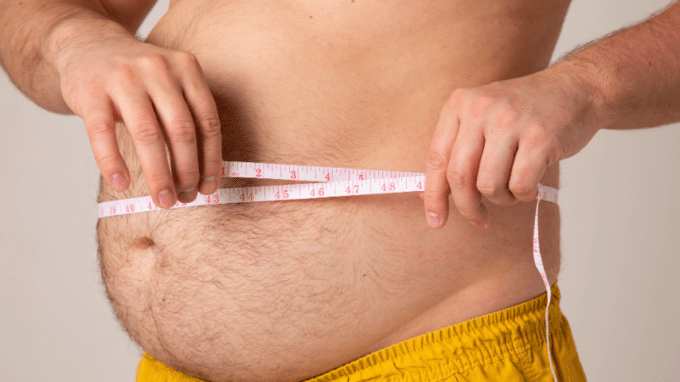
An increasing waist circumference isn’t just a matter of body weight. Excess fat in the abdominal cavity can affect male hormone balance and may also impair fertility. Of particular interest here is so-called visceral fat, which accumulates deep within the abdominal cavity around the internal organs. It influences metabolic processes, can impair insulin sensitivity, and is linked to lower testosterone levels. For men hoping to have children, this could play a role that has been underestimated until now.
Why Abdominal Fat in Particular Can be Hormonally Problematic
Being overweight is often associated primarily with cardiovascular disease, diabetes, and other metabolic problems. But male reproductive function can also be affected. It’s not just a matter of how much a man weighs. The distribution of body fat can also be a decisive factor. Belly fat, in particular, is increasingly becoming the focus of research. This is because adipose tissue is by no means merely a passive energy store. It produces hormonally active messenger substances and influences various metabolic processes. If adipose tissue in the abdominal cavity increases excessively, this can also alter the delicate balance of male sex hormones.

This is particularly relevant for men who wish to have children. Testosterone plays a central role in male reproductive function. Changes in hormonal balance can affect, among other things, sexual desire, erectile function, and the hormonal regulation of the reproductive organs. When it comes to abdominal fat, a distinction must be made between two different types of fat deposits. Subcutaneous fat lies directly under the skin and is visible, for example, on the hips or abdomen. Visceral fat, on the other hand, is located deeper within the abdominal cavity and surrounds the internal organs. This internal abdominal fat is particularly metabolically active. It releases various signaling molecules that can influence inflammatory processes and alter the insulin sensitivity of the body’s cells.
If too much visceral fat accumulates over a long period of time, the risk of insulin resistance often increases. As a result, the body’s cells become increasingly less responsive to the hormone insulin. The pancreas must then produce more insulin to regulate blood sugar levels. These metabolic changes can also affect the hormonal regulation of male reproductive function. Studies show that men with pronounced abdominal obesity are more likely to have lower testosterone levels.
A study published in July 2026 in the Journal of the Endocrine Society provides interesting insights into this. The researchers analyzed data from 4,948 men between the ages of 20 and 59. They found that men with a high proportion of visceral fat within the same BMI category had significantly lower testosterone levels than men with less internal abdominal fat. Depending on the comparison, testosterone levels in men with a higher proportion of visceral fat were approximately 33 to 36 percent lower. The results illustrate that BMI alone may not be sufficient to assess the hormonal effects of being overweight. The distribution of body fat also appears to play an important role. However, this is a cross-sectional study. It can show an association but cannot prove that abdominal fat alone is responsible for the lower testosterone levels.
How Belly Fat Can Affect Testosterone Levels
One important mechanism is the activity of the enzyme aromatase. This enzyme is found, among other places, in adipose tissue and converts male sex hormones such as testosterone into estrogens. A higher proportion of adipose tissue can increase aromatase activity. This can alter the ratio of testosterone to estrogen. At the same time, metabolic changes, increased insulin resistance, and chronic low-grade inflammatory processes can influence hormonal regulation.
Normally, testosterone production is controlled via a hormonal signaling pathway: The hypothalamus in the brain releases GnRH, prompting the pituitary gland to secrete the hormones LH and FSH. LH stimulates testosterone production in the testicles. If this interaction is disrupted, the body’s own testosterone production may decline. In some men who are severely overweight, this leads to what is known as functional secondary hypogonadism. In this condition, testosterone levels are low without necessarily indicating a primary testicular disorder.
When Testosterone Deficiency Affects the Desire to Have Children
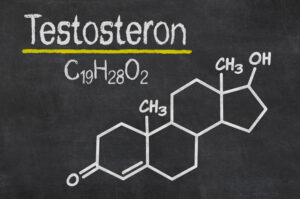
Testosterone is essential for numerous functions in the male body. Among other things, it influences libido, muscle mass, bone health, and sexual function. The hormone is also indispensable for reproduction. Within the testicles, a high local concentration of testosterone ensures that the formation and maturation of male germ cells are supported. If testosterone levels drop significantly, this can impair the hormonal regulation of reproductive function. At the same time, sexual desire and erectile function may change.
This can have several implications, particularly for couples trying to conceive. If libido declines or erectile problems arise, sexual intercourse—and thus the chances of natural conception—can be compromised. However, it is important to distinguish between low blood testosterone levels and actual fertility. Not every man with low testosterone is infertile. Conversely, a normal testosterone level does not automatically mean that there are no fertility issues.
A Vicious Cycle of Belly Fat and Low Testosterone?
It is interesting to note that both factors can influence each other. On the one hand, excess abdominal fat can be linked to lower testosterone levels through various metabolic and hormonal mechanisms. On the other hand, low testosterone levels contribute to changes in body composition. Men with low testosterone lose muscle mass more easily and may simultaneously accumulate more body fat. As a result, the proportion of visceral fat tissue can increase further. This may create a cycle in which excess weight and hormonal changes reinforce one another. A particularly problematic aspect is that the metabolic activity of fat tissue can change as fat accumulation increases. Visceral fat releases pro-inflammatory signaling molecules and can thereby promote chronic, low-grade inflammatory processes. These, in turn, can impair the insulin sensitivity of the body’s cells and lead to further metabolic changes.
Hormonal regulation can also be affected. Increasing insulin resistance and changes in the signaling pathways between the brain, pituitary gland, and testes can contribute to less effective regulation of the body’s own testosterone production. At the same time, increased aromatase activity in adipose tissue can enhance the conversion of testosterone into estrogens. This can further disrupt the hormonal balance. In addition, visceral fat is often associated with other health problems. These include elevated blood sugar levels, high blood pressure, unfavorable blood lipid levels, and an increased risk of type 2 diabetes. These comorbidities can further impair overall health as well as sexual function.
For men hoping to have children, this development is relevant for several reasons. Metabolic disorders, for example, can impair vascular function and thus increase the risk of erectile dysfunction. A pronounced testosterone deficiency can also reduce sexual desire and alter the hormonal conditions necessary for reproduction. However, this relationship does not play out the same way for every man. Not every man with abdominal fat develops a testosterone deficiency, and not every low testosterone level is automatically attributable to being overweight. Sleep disorders, certain medications, chronic diseases, and disruptions in hormone production can also play a role. This makes it all the more important, when noticeable symptoms arise, to examine not only body weight but also the overall metabolism and hormonal balance. After all, sometimes an increasing waist circumference indicates more than just a change in body shape—namely, an interplay of various processes that can also be significant for male reproductive health.
Can Weight Loss Improve Male Fertility?
The good news: Some of the hormonal changes associated with being overweight can be reversed by improving metabolism. Studies show that weight loss in overweight men can increase testosterone levels. A combination of a balanced diet and regular physical activity, in particular, appears to be helpful in this regard. The European guidelines on male sexual and reproductive health also recommend that overweight men lose weight and improve their lifestyle. This does not necessarily mean losing weight as quickly or drastically as possible. Even a sustainable change in dietary and exercise habits can have positive effects on various metabolic parameters.

Regular strength training can help build or maintain muscle mass. Endurance exercise supports cardiovascular health and can improve insulin sensitivity. A balanced diet rich in vegetables, whole grains, legumes, high-quality protein sources, and healthy fats can also help support metabolism. However, there is an important caveat to consider: Just because weight loss can improve testosterone levels does not automatically mean that it demonstrably increases the likelihood of conception. The scientific data on whether weight loss in men actually improves the live birth rate has so far been less conclusive.
Why Men Trying to Conceive Should Also Keep an Eye on Their Metabolism
When a couple is struggling to conceive, attention often focuses first on the woman. However, the man’s metabolic and hormonal health also deserves attention. A large waist circumference, high blood pressure, elevated blood sugar levels, or known insulin resistance can be signs that the metabolism is out of balance. If you have these symptoms, a medical examination may be advisable.
Depending on the situation, this may include measuring morning testosterone levels, testing other hormone levels, and screening for possible metabolic disorders. It is also important not to rush into testosterone therapy. Exogenous testosterone treatment can suppress the body’s own hormonal regulation and thereby significantly impair sperm production. Men who are currently trying to conceive should therefore definitely discuss such treatment with a specialist.
Research is increasingly showing that male fertility is closely linked to overall metabolic health. Visceral fat, in particular, can influence testosterone levels through hormonal and metabolic processes. For men hoping to have children, it is therefore worthwhile to look not only at individual fertility metrics but also to consider their overall health. A healthy lifestyle, regular exercise, and a balanced diet can lay the groundwork for improving metabolism and supporting hormonal balance. While this does not guarantee a pregnancy, a man’s physical health should be taken into account just as much as a woman’s when planning to have a child.
You may also be interested in...
-

The Wnt signaling pathway is one of many signal transduction pathways through which cells can…
-
Male fertility is a common concern among couples trying to conceive. There are many reasons…
-
Research shows a connection between male fertility and vitamin B6 since it is the synthesis…