

When trying to conceive doesn’t work right away, many women first think about their hormones, ovulation, or egg quality. But there’s another important factor that’s often underestimated: insulin and the body’s insulin sensitivity. Insulin is much more than just a hormone that regulates our blood sugar. It is also closely linked to our hormonal balance and can play an important role in fertility, especially for women with polycystic ovary syndrome (PCOS).
What Exactly is Insulin?
Insulin is a vital hormone produced in the pancreas. More specifically, it is produced in the so-called beta cells of the islets of Langerhans. Its main function is to regulate blood sugar levels and ensure that the body’s cells are supplied with sufficient energy. When we eat carbohydrate-containing foods such as bread, pasta, rice, fruit, or potatoes, the carbohydrates they contain are broken down into smaller sugar molecules during digestion. A large portion of this enters the bloodstream as glucose (grape sugar). This causes blood sugar levels to rise. The pancreas detects this rise and releases insulin into the bloodstream. Insulin acts like a biological key: it enables muscle and fat cells, in particular, to take up glucose from the blood. The absorbed glucose can then be used to produce energy or stored.
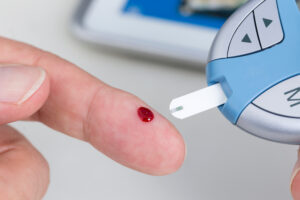
The liver also plays an important role. There, insulin supports the storage of excess glucose in the form of glycogen while simultaneously inhibiting the production of new sugar. In this way, insulin helps bring blood sugar levels back to a normal range after a meal. In a condition known as insulin resistance, certain cells in the body become less sensitive to the effects of insulin. This means that the body requires more insulin to achieve the same metabolic effect. The pancreas initially tries to compensate for this reduced effect by producing and releasing more insulin. This can lead to elevated insulin levels, even though blood sugar may still be completely normal at first. This condition is known as compensatory hyperinsulinemia. Over time, however, this compensatory response can reach its limits. When the beta cells of the pancreas can no longer produce enough insulin, blood sugar levels also rise. This can initially lead to prediabetes and, in the long term, to type 2 diabetes.
How Insulin Resistance Affects the Body
A systematic review with a meta-analysis from 2016, which evaluated 28 studies using the so-called euglycemic-hyperinsulinemic clamp method, demonstrates just how pronounced insulin resistance can be. This method is considered the scientific gold standard for measuring insulin sensitivity. The researchers found that women with PCOS had, on average, approximately 27 percent lower insulin sensitivity than women without PCOS. Interestingly, the reduced insulin sensitivity was not limited to women who were overweight. BMI also influenced the degree of insulin resistance.

It is particularly interesting that insulin not only influences glucose metabolism but also interacts with our endocrine system. Especially in women with polycystic ovary syndrome (PCOS), persistently elevated insulin levels can place an additional hormonal burden on the body. High insulin levels can increase the production of male hormones, particularly androgens, in the ovaries. At the same time, insulin can reduce the production of sex hormone-binding globulin (SHBG) in the liver. This protein normally binds some of the sex hormones in the blood. If SHBG levels drop, this can result in higher levels of free, biologically available testosterone. High insulin levels can increase the production of male hormones, particularly androgens, in the ovaries. At the same time, insulin in the liver can reduce the production of sex hormone-binding globulin (SHBG). This protein normally binds some of the sex hormones in the blood. If SHBG levels drop, this can result in more free, biologically available testosterone.
This relationship was also described in detail in a scientific statement by the Endocrine Society on the onset and development of PCOS. In it, the researchers explain that insulin can both directly stimulate androgen production in the ovaries and indirectly increase the availability of male hormones by reducing SHBG levels. This hormonal imbalance can impair the normal development of follicles and contribute to irregular ovulation or even the absence of ovulation. As a result, some women may find it more difficult to become pregnant.
The international evidence-based PCOS guideline from 2023 also confirms the importance of insulin resistance in the clinical picture. At the same time, it emphasizes that while insulin resistance plays an important role in PCOS, it is not equally pronounced in every affected woman. Furthermore, the measurement methods currently available for routine direct assessment of insulin resistance are only of limited reliability. This is precisely why, when trying to conceive—and especially in cases of PCOS—it is important to monitor metabolic health in addition to traditional sex hormones. Insulin resistance is not automatically present in every woman trying to conceive, but it can play an important role in certain hormonal disorders.
What Does Insulin Have to Do With Trying to Conceive?
This connection becomes particularly interesting when it comes to the female hormonal system. In some women, insulin resistance can influence the production of male hormones (androgens) in the ovaries. Elevated insulin levels can thus contribute to a hormonal imbalance.
This can have various effects:
- Ovulation may become irregular or cease altogether.
- The menstrual cycle may become longer.
- The maturation of the follicles may be impaired.
- Male hormone levels may be elevated.
- In cases of PCOS, typical symptoms may be more pronounced.
Insulin resistance plays a particularly common role in polycystic ovary syndrome (PCOS). Important: Not every woman trying to conceive has insulin resistance. And not every woman with insulin resistance automatically has fertility problems.
PCOS and Insulin Resistance – A Special Connection
Polycystic ovary syndrome is one of the most common hormonal disorders among women of childbearing age. Many affected women also have insulin resistance. The resulting elevated insulin levels can stimulate androgen production in the ovaries. This, in turn, can disrupt ovulation and cause irregular periods.

Possible signs include:
- Irregular or absent periods
- Excessive body or facial hair
- Acne and blemished skin
- Difficulty ovulating
- Difficulty getting pregnant
However, PCOS can also occur in slim women. Body weight alone, therefore, does not indicate whether insulin resistance is present.
Can insulin Sensitivity be Improved?
Yes. Lifestyle changes can play a significant role in improving metabolic health.
1. Eat balanced meals
A balanced diet can play a significant role in improving insulin sensitivity and keeping blood sugar levels as stable as possible. What’s particularly important here is not only what foods we eat, but also how we combine them. Carbohydrates, for example, don’t necessarily need to be avoided. Rather, it’s crucial to pay attention to their quality and the composition of meals.
Whole grains, legumes, vegetables, and high-fiber foods are often digested more slowly and can therefore help maintain a more steady rise in blood sugar. If these foods are also combined with protein and healthy fats, this can slow the absorption of carbohydrates and help you feel fuller longer. Good sources of protein include eggs, fish, plain yogurt, legumes, and lean meat. Healthy fats can be found in olive oil, avocados, nuts, and seeds, among other foods.
It’s particularly important not to let highly processed foods, sugar-rich beverages, and large amounts of rapidly available carbohydrates become the foundation of your daily diet. However, this doesn’t mean you have to completely give up sweets or certain foods. Rather, the goal is a long-term, balanced, and varied diet that supports your metabolism.
2. Regular Exercise
Physical activity is one of the most effective ways to positively influence the body’s insulin sensitivity. Our muscles need energy, particularly in the form of glucose. During exercise, muscle cells absorb more sugar from the blood. Interestingly, during physical activity, muscles can sometimes absorb glucose even without the influence of insulin.
Regular exercise can also help restore muscle cells’ sensitivity to insulin over the long term. A combination of endurance training and strength training is particularly effective. Walking, cycling, swimming, or brisk walking build endurance, while strength training supports muscle growth. More muscle mass also means more tissue capable of absorbing and utilizing glucose.
Even small changes in daily life can make a difference. Taking a walk after a meal, taking the stairs instead of the elevator, or taking regular activity breaks during a predominantly sedentary job are good ways to incorporate more activity into your daily routine. So it doesn’t always have to be an intense workout program. Consistency is what matters most.
3. Get Enough Sleep
Sleep is often underestimated when it comes to metabolic health. Yet it plays a crucial role in regulating various hormones and processing energy in the body. While we sleep, numerous regenerative and regulatory processes take place that also influence glucose metabolism.

Scientific studies show that chronic sleep deprivation can impair insulin sensitivity. Even just a few nights of insufficient sleep can cause the body’s cells to become less sensitive to insulin. The body may then require more insulin to regulate blood sugar levels.
In addition, sleep deprivation can affect the regulation of hunger and satiety. This can lead to more frequent cravings and an increased tendency to reach for high-calorie foods. A regular sleep schedule and adequate rest are therefore essential components of a healthy metabolism. For most adults, about seven to nine hours of sleep per night is considered a good guideline. Especially when trying to conceive, getting enough sleep should not be overlooked. It supports overall health and can help positively influence metabolism and hormonal balance.
4. Reduce Stress
Stress can also affect our sugar metabolism. In stressful situations, the body releases increased levels of stress hormones such as cortisol and adrenaline. These hormones put the body on high alert and, among other things, ensure that more glucose is made available for a rapid energy supply. In the case of short-term stress, this is a completely normal and important response. However, if high stress levels persist over a long period, this can negatively affect metabolism. Chronically elevated cortisol levels can, among other things, impair insulin sensitivity and make it harder to regulate blood sugar. In addition, prolonged stress can disrupt sleep, alter eating habits, and lead to a lack of exercise and rest in daily life. As a result, several factors can interact and place additional strain on metabolic health.
This makes it all the more important to regularly schedule intentional periods of rest. Walks in the fresh air, breathing exercises, yoga, meditation, or simply setting aside enough time for yourself can help reduce your personal stress levels. Social interactions and activities that bring joy are also valuable components of a healthy daily routine. Especially when trying to conceive, it’s important not to put additional pressure on yourself. Reducing stress is no guarantee of pregnancy, nor does it mean you are personally responsible for an unfulfilled desire to have children. Rather, the goal is to create the right conditions for your body’s health and well-being.
What Tests are Recommended When Trying to Conceive?
If PCOS or a glucose metabolism disorder is suspected, a medical evaluation may be advisable.
Depending on the individual situation, these may include:
- Fasting blood sugar
- Long-term blood sugar (HbA1c)
- Oral glucose tolerance test (oGTT)
- Hormone tests
- Assessment of ovulation
Particularly important: For women with PCOS, international guidelines recommend the oral glucose tolerance test to assess glucose metabolism, even regardless of BMI. An isolated insulin level, on the other hand, is not automatically meaningful. Routine insulin measurements are not recommended in the international PCOS guidelines.
Can Improved Insulin Sensitivity Increase the Chances of Pregnancy?
For women with PCOS and insulin resistance, improving metabolic health can help positively influence hormonal balance and ovulatory function. However, this does not mean that dietary changes or exercise alone guarantee pregnancy. If ovulation does not occur, there are medical treatment options available. Which one is appropriate depends on the individual cause.
In general, insulin is an important component of our metabolism and is closely linked to the female hormonal system. Especially with PCOS, it’s worth focusing not only on the menstrual cycle but also on metabolic health. This is because sometimes part of the hormonal challenge lies not exclusively in the ovaries but also in the interaction between metabolism and hormones.
You may also be interested in...
-

For women who are struggling with infertility, the problem could stem from blood glucose levels…
-
Being able to conceive is something many take for granted. Since starting a family can…
-
The occurrence of blood clots could affect a woman's fertility levels. Blood clotting is an…