
How long should you try to get pregnant before seeking medical help? An updated medical guideline provides new guidance for couples hoping to have a child. The most important factors are age, individual medical history, and the right time to seek evaluation. For many couples, the desire to have a baby of their own is associated with hope, anticipation, and sometimes uncertainty.
When pregnancy takes longer to occur than expected, questions often arise: Is this still normal? Should I monitor my cycle more closely? And when does it make sense to have my fertility evaluated? In September 2026, the recommendations for diagnosis and treatment prior to medically assisted fertility treatments in Germany were updated. The revised guideline emphasizes the importance of a structured and age-appropriate evaluation.
How Long is it Reasonable to Wait When Trying to Conceive?
Not every pregnancy happens right away. Even for healthy couples, it can take several months for their wish to have a child to be fulfilled. How long one should wait depends, among other things, on the woman’s age. The updated German recommendations provide the following guidance:

- Under 35 years of age: An evaluation is recommended if pregnancy has not occurred after twelve months of regular, unprotected sexual intercourse.
- 35 years of age and older: A medical evaluation should be considered after just six months.
- Over 40 years of age: A prompt consultation at a reproductive medicine center is recommended.
These time frames are guidelines and do not constitute a recommendation to wait if known risk factors are present. In cases of irregular or absent periods, known medical conditions, or other potential fertility issues, an earlier evaluation may be advisable.
Why Age Plays a Role in Fertility
Female fertility changes over the course of a woman’s life. With increasing age, both the number of available eggs and their average quality decline. At the same time, the risk of errors in the distribution of chromosomes during egg maturation increases. Such changes can impair embryo development and increase the risk of miscarriage.
Current research is also investigating exactly how this process works. On October 23, 2026, Yale University published a study that provides new insights into age-related changes in eggs. The researchers examined so-called centromeres—specific regions of chromosomes that are important for their correct distribution during cell division. In experiments with mouse egg cells, they found that certain proteins involved in this process may decrease with age. This may make the correct distribution of chromosomes more difficult. The findings help to better understand the biological causes of the age-related decline in egg quality.
For women hoping to have children, these findings are scientifically interesting. However, the studies were conducted on mice and cannot be readily applied to humans. So far, this has not led to any new treatment options. It therefore remains crucial to have one’s fertility assessed on an individual basis. In addition to age, the menstrual cycle, any pre-existing medical conditions, and the partner’s sperm quality also play a role. Anyone who has questions about their own fertility or has been trying to conceive for some time can consult a doctor to discuss possible next steps.
AMH Level: How Much Does a Fertility Test Really Reveal?
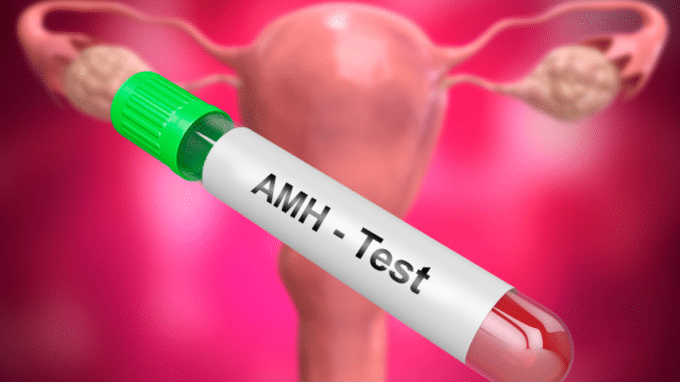
Many women are interested in their AMH level—the so-called anti-Müllerian hormone level—to learn more about their fertility. A simple blood test can provide insight into ovarian reserve, that is, the number of eggs remaining in the ovaries. But what does the result actually mean for the desire to have children?

A low AMH level does not automatically mean that a woman is infertile. Conversely, a normal or high level does not guarantee a spontaneous pregnancy. The test primarily provides information about how the ovaries are likely to respond to hormonal stimulation as part of fertility treatment. However, it offers only limited predictive power regarding whether and when a natural pregnancy will occur.
Recent research findings from 2026 also underscore this limitation. A Danish study involving more than 43,000 women showed that the AMH level alone has only limited predictive value for a future pregnancy. The results make it clear that fertility depends on several factors and cannot be assessed based on a single number.
For women hoping to conceive, it is therefore crucial to always consider the AMH level in the context of age, the menstrual cycle, medical history, and other test results. If necessary, additional tests can help identify possible causes of infertility. Important to know: The AMH test can provide helpful medical information, but it is not a fertility countdown. An abnormal result should therefore neither cause unnecessary anxiety nor should a normal result lead to a false sense of security.
Fertility Affects Both Partners
When pregnancy does not occur, attention often focuses first on the woman. However, both female and male factors can play a role. A comprehensive evaluation therefore includes—depending on the individual situation—for example:
- tracking the menstrual cycle and identifying potential ovulation issues
- examination of the ovaries and uterus
- assessment of relevant hormonal factors
- a semen analysis to evaluate sperm quality
- screening for potential pre-existing conditions and other risk factors
It is not always possible to identify a clear cause. Nevertheless, structured evaluations can help determine appropriate next steps.
What Can I Do On My Own to Support My Efforts to Conceive?
A healthy lifestyle can support overall health and create the conditions necessary for pregnancy. This includes a balanced diet, regular exercise, adequate sleep, and avoiding nicotine. Alcohol, medications, and dietary supplements should also be carefully considered when planning to conceive.

For women trying to conceive, it is generally recommended to take 400 micrograms of folic acid daily even before a potential pregnancy, ideally at least four weeks before conception. In cases of certain pre-existing conditions or risk factors, a different dosage may be necessary and should be determined by a doctor.
However, it’s important to remember: No single food, dietary supplement, or relaxation program can guarantee a pregnancy. And if it doesn’t work right away, that’s no proof that you’ve done anything wrong.
Wanting to Have a Child: Finding the Right Time to Seek Support
An unfulfilled desire to have a child can be emotionally taxing. Many people in this situation compare themselves to others, look for possible mistakes, or put pressure on themselves. It’s important to realize that fertility is influenced by many different factors.
The updated recommendations from 2026 provide important guidance: Knowing when it makes sense to seek evaluation allows you to make informed decisions and, if necessary, receive support early on. If you’re concerned about your fertility or have been trying to get pregnant for some time, discuss your personal situation with your gynecologist or a specialized fertility clinic.
You may also be interested in...
-

When it comes to women’s fertility and reproductive hormones, a variety of key hormones come…
-
For women who are struggling with infertility, the problem could stem from blood glucose levels…
-
Older men are not only fighting against time, but also against rising blood sugar levels.…