
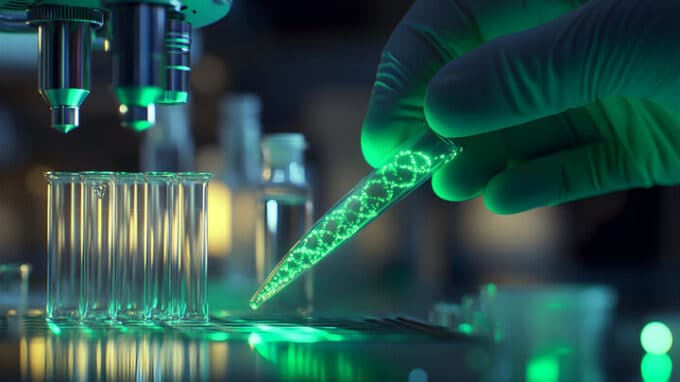
Infertility is a widespread problem worldwide, affecting around one in six couples—in around half of all cases, the man plays a significant role. A particularly severe form of this is non-obstructive azoospermia, or NOA for short: men with this diagnosis produce no sperm at all in their ejaculate, even though their hormone levels are often within the normal range. This form of infertility is usually caused by genetic defects that block the process of spermatogenesis – the smooth development of germ cells into mature sperm.
Previous treatments such as surgical sperm retrieval (e.g., microTESE) or hormone therapies often reach their limits here because there are simply no mature cells available that could be used. Researchers from Japan and the US have published a remarkable breakthrough: in a mouse model of NOA, they succeeded in specifically reactivating the disrupted process of spermatogenesis – using mRNA therapy injected directly into the testicular tissue.
How Does this mRNA Therapy Work?
The underlying idea is elegant: instead of permanently altering the genetic material (as classic gene therapies might attempt to do), this method uses messenger RNA (mRNA), i.e., a temporary messenger RNA, to provide missing but essential protein information for sperm formation. This mRNA is not injected unprotected, but packaged in tiny lipid nanoparticles (LNPs) that function like small transport capsules and deliver the mRNA to the target cells.
In this specific project, the target gene was Pdha2, a gene that is necessary for the completion of meiosis, a central part of spermatogenesis. Mice with a defect in this gene exhibit a “meiosis arrest,” in which sperm development is blocked early on. By injecting the Pdha2 mRNA directly into the testes, the researchers were able to overcome this block. The LNPs distributed themselves in the seminiferous tubules, where the mRNA was taken up by the cells. Through targeted molecular fine-tuning (incorporation of microRNA recognition sequences), protein production was activated primarily in the germ cells and less so in the supporting Sertoli cells, making the therapeutic effect even more targeted.
Within two weeks of treatment, the previously blocked cells formed round spermatids, the precursors of mature sperm. After about three weeks, fully developed sperm were found in the testicles for the first time. These sperm were then combined with egg cells using standard assisted reproduction techniques (intracytoplasmic sperm injection, ICSI). The result: the birth of healthy, normally developed mouse offspring that were themselves fertile later on. A detailed genome analysis showed no significant, large-scale DNA damage in the offspring.
Why is This so Important?
This research report shows two things: First, that a genetically defined defect in spermatogenesis does not necessarily have to be an irreversible condition; Second, that mRNA-based gene therapy can be a safe and non-integrating alternative to classical methods. With conventional gene therapies, there is often concern that the inserted material will integrate into the genome and trigger unwanted changes. mRNA, on the other hand, only has a temporary effect and is broken down in the body after a short time, which significantly reduces the risk.
The method of packaging mRNA in lipid nanoparticles is reminiscent of the technology used in modern vaccines, which use the same delivery mechanism – but with a completely different medical goal: not to train the immune system to defend against viruses, but to temporarily provide missing genetic information in order to restore a fundamental biological process.
What Does this Mean for Humans?
Although these results are groundbreaking, it is important to emphasize that this is currently preclinical research in mice. Human spermatogenesis is more complex and genetically variable than that of model animals. Before such an approach can be tested in humans, many questions still need to be answered: How can mRNA be transported safely and specifically into human testicles? Which genes could be usefully targeted in which patient groups? And, of course, what is the long-term safety profile of repeated mRNA therapies administered over a longer period of time?
Despite these unanswered questions, the results mark a milestone: For the first time, it has been shown that a gene therapy-like intervention can restart spermatogenesis in a genetically determined NOA model and lead to the production of healthy offspring. For men whose infertility is genetically determined, this could one day – perhaps in 5 to 10 years – be more than just a hope.
Difference from Other Gene Therapy Technologies
Non-obstructive azoospermia (NOA) is one of the most severe forms of male infertility, as spermatogenesis in the testicles themselves comes to a standstill, usually due to genetic defects. In 2025, an international research group demonstrated for the first time that such a genetic block can be overcome in a mouse model using mRNA-based gene therapy.

In this study, artificially produced mRNA encoding an essential protein for meiosis (in this case, the Pdha2 gene) was packaged in lipid nanoparticles and injected directly into the testicles. The mRNA was taken up by the germ cells, translated into the missing protein there, and enabled the cells to resume the previously blocked developmental step. Within a few weeks, mature sperm were formed again, which could be used in assisted reproduction and produced healthy, fertile offspring.
The scientific significance of this approach lies primarily in its safety and precision: unlike traditional gene therapies, mRNA does not permanently alter the genetic material, but only has a temporary effect and is subsequently broken down. This reduces the risk of unintended genetic effects, especially in the sensitive area of the germ line. Although these results have so far been obtained exclusively from animal models and require years of intensive research before they can be applied to humans, the study is considered an important proof of concept. It shows for the first time that genetically caused male infertility can in principle be reversible – a change in perspective that could open up new therapeutic options in the long term for men for whom even the most modern reproductive medicine currently reaches its limits.
You may also be interested in...
-

While it is not uncommon to hear about the emotional toll that infertility can have…
-
When a couple’s wish to have children isn’t coming true, male infertility is responsible one…
-
Fertility, when it comes to men, is all about the sperm. Men need to be…