As we age, many things change in the body—and egg cells are no exception. While a woman may still appear healthy and young on the outside, the quality of her egg cells begins to decline years earlier. This process becomes particularly noticeable starting in her mid-30s and accelerates with age. It’s not just the number of available egg cells that decreases; the quality of the remaining egg cells also changes. This is precisely where one of the most exciting questions in modern reproductive research comes in: Is it possible to slow down the biological aging of an egg—or perhaps even partially reverse it?
Researchers are now intensively studying this question. The goal is not to make a woman biologically younger. Rather, scientists are trying to understand which processes impair an aging egg and whether some of these changes can be directly influenced within the cell.
Why Egg Cells Age Particularly Sensitively
Egg cells are extraordinary cells. Unlike many other body cells, they are not constantly regenerated. Women are born with a limited supply of egg cells, which steadily decreases over the course of their lives. At the same time, the egg cells remain in the ovary for many years before individual ones mature and are released during ovulation.
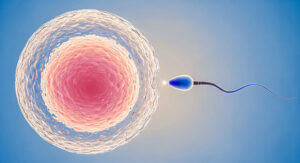
As a woman ages, various types of damage and changes can accumulate. Among other things, scientists observe impaired mitochondrial function, increased oxidative stress, chromosomal changes, problems with cell division, and alterations in DNA and epigenetic processes.
Errors in the distribution of chromosomes during egg maturation are particularly problematic. This can result in embryos with an abnormal number of chromosomes after fertilization. This is one of the reasons why the risk of miscarriage and certain chromosomal abnormalities increases with advancing maternal age.
Mitochondria Take Center Stage
A major focus of research is on mitochondria. These tiny structures are often referred to as the cell’s powerhouses because they provide energy in the form of ATP. An egg cell requires a great deal of energy during its maturation and after fertilization. If the mitochondria function poorly, this can impair egg maturation, chromosome distribution, and early embryonic development.
For this reason, researchers are working to improve the energy supply to aging egg cells. In animal studies, for example, substances that influence mitochondrial metabolism have been investigated. Of particular interest are coenzyme Q10, NAD+, and other metabolic pathways associated with energy production and cellular aging.
NAD+: A Possible Key to “Rejuvenation”
NAD+ (nicotinamide adenine dinucleotide) is currently receiving particular attention. This molecule is essential for numerous metabolic processes and plays an important role in mitochondrial function, among other things.
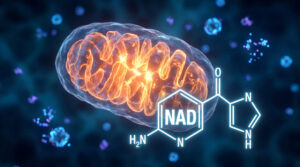
In animal studies, scientists have shown that increasing NAD+ levels can improve the quality of aging egg cells. Among other things, improvements were observed in mitochondrial function and in processes important for proper chromosome segregation. Researchers are therefore investigating whether specifically targeting these signaling pathways could help slow age-related changes in the egg cell.
Is it Actually Possible to Rejuvenate an Aged Egg Cell?
Here, a distinction must be made between fascinating laboratory results and a treatment that is already available. In various animal models, researchers have been able to improve certain characteristics of aging egg cells. Experimental methods are also being investigated using human eggs. These include, among other things, approaches that influence energy metabolism, oxidative stress, or mitochondrial function. However, a recent review from 2025 concludes that only a few of these strategies have, so far, been supported by sufficiently robust clinical data in humans.
Research on melatonin provides  one example. In a laboratory study, immature egg cells from women of various ages were matured outside the body. In older women, the addition of melatonin during this experimental maturation process led to improvements in certain mitochondrial and chromosomal characteristics. Such results are interesting but do not yet mean that taking melatonin as a dietary supplement improves fertility in older women.
Researchers face a fundamental challenge: the egg cell does not exist in isolation. It develops in the ovary in close association with so-called granulosa cells and other cells of the follicle. These cells supply the egg with nutrients, signals, and metabolic products. As women age, these supporting cells also change. Therefore, a potential “rejuvenation” of the egg cell alone might not be sufficient. Its environment in the ovary could also play an important role. This makes the development of a future treatment particularly complicated. Researchers are therefore studying not only the egg itself but also the entire environment of the maturing follicle.
Why This Research Is Important for Those Hoping to Have Children
The number of women having their first child at an older age is increasing. At the same time, egg aging is one of the most important factors limiting natural fertility. While it is possible to attempt to retrieve multiple eggs during in vitro fertilization, the age-related quality of the eggs remains a decisive factor even in this process. If scientists were one day to succeed in safely and reliably reducing certain age-related damage to the egg, this could fundamentally change reproductive medicine. Women might have a better chance of obtaining healthy eggs even at an older reproductive age.
But medicine is still a long way from achieving this. Currently, there is no established treatment that has been proven to biologically rejuvenate a human egg and thereby reliably increase pregnancy or live birth rates. Research does, however, reveal something important: the aging of the egg is not a single, unchanging process. It consists of many interconnected changes—ranging from mitochondrial dysfunction and oxidative stress to problems with chromosome segregation and changes in the cellular environment.
If scientists gain a better understanding of these individual processes, new possibilities for maintaining reproductive health for longer may open up. So, for now, the “biological clock of the egg” cannot simply be turned back. But researchers are increasingly trying to determine which cogs in this clock can actually be adjusted. This, precisely, could hold the key in the long term to better understanding—and perhaps one day specifically influencing—the age-related decline in egg quality.
You may also be interested in...
-

For years, melatonin has been a large proponent in sleep and circadian rhythm studies, however,…
-
New research describes the science behind a promising technique to treat infertility by turning a…
-
Human growth hormone (HGH) assists in the production of progesterone and estrogen, primary hormones necessary…