
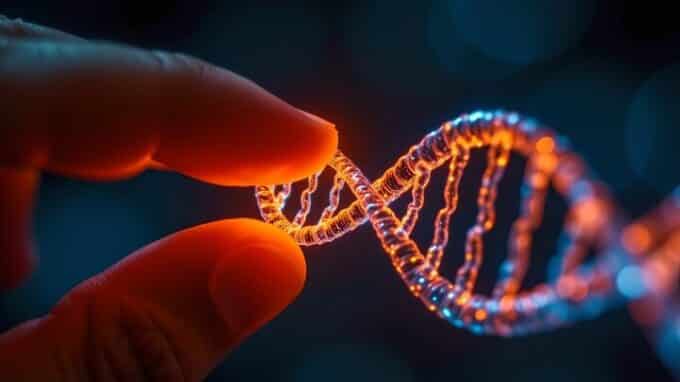
For many years, researchers believed that the DNA in a freshly fertilized egg cell was initially a structural “blank slate”—a loose and unorganized bundle that only took on order when the embryo began to use its own genes. According to this traditional view, the genome remained largely unstructured until it “awoke” and started its genetic program. A new study published in Nature Genetics challenges this long-held assumption.
Pico-C Technology Maps DNA Folding in Fruit Flies
Professor Juanma Vaquerizas and his colleagues report that the genome exhibits an unexpected degree of organization even at this earliest stage. The genome is the totality of all genetic information in an organism. It comprises the complete DNA – i.e., all genes as well as sections that do not code for proteins but may have important regulatory functions. The team developed a new technology called Pico-C that allows scientists to examine the 3D structure of the genome in minute detail. Using this approach, they found that long before the genome is fully activated—a milestone known as zygotic genome activation—a sophisticated 3D scaffold of DNA is already taking shape.

This early folding pattern is not just a structural curiosity. The way DNA is arranged in space determines which genes can be activated during development. This control is essential for proper cell function and helps prevent developmental disorders and diseases. “We used to think that the time before the genome awakens was a period of chaos,” explains Noura Maziak, lead author of the study. “But when we zoom in closer than ever before, we see that it is actually a highly disciplined construction site. The scaffold of the genome is built precisely and modularly, long before the ‘on’ switch is fully flipped.”
The discovery was made using the fruit fly (Drosophila), a model organism widely used in genetic research. In the first few hours after fertilization, the fruit fly embryo divides rapidly, producing thousands of cells in a short period of time. This rapid pace of development makes it an ideal system for studying how genomes are organized and regulated.
Using their highly sensitive Pico-C method, the researchers mapped the 3D arrangement of the fruit fly genome in these early stages. The PICO-C method is a scheme from evidence-based medicine that is used to formulate a precise, scientifically testable question – for example, for studies, literature searches, or systematic reviews. It helps to clearly structure a clinical question. They found that the DNA winds and folds according to a modular pattern, allowing different regulatory signals to influence specific regions of the genome. This complex architecture ensures that genetic information is prepared and positioned for activation exactly when it is needed. Pico-C not only provides detailed insights into DNA structure, but also requires only very small samples – about ten times less material than standard methods. This efficiency makes it possible to investigate with far greater precision how DNA folding influences gene regulation and how disturbances in this architecture can contribute to disease.
When the Genome Architecture Collapses in Human Cells
Although the structural “blueprint” was first identified in fruit flies, its relevance extends to human biology. In a companion study published in Nature Cell Biology and led by Professor Ulrike Kutay and colleagues at ETH Zurich in Switzerland, the researchers applied the same high-resolution mapping strategy to human cells.
They investigated what happens when the molecular “anchors” that stabilize the 3D structure of the genome are removed. The results were astonishing. When this structural scaffold falls apart, human cells interpret the collapse as if they were being attacked by viruses. This misinterpretation activates the cell’s innate immune system and triggers a false alarm that can lead to inflammation and disease. “These two studies tell a complete story,” says Juanma. “The first shows us how the 3D structure of the genome is carefully constructed at the beginning of life. The second shows us the catastrophic consequences for human health when this structure can collapse.”
You may also be interested in...
-

Diabetes is a chronic medical condition that seriously affects the longevity and the fertility of…
-
Researchers at the University of Adelaide have used cameras designed for quantum measurements to image…
-
An international research team led by Helmholtz Munich has gained detailed insights into how the…