

In the future, drugs derived from cannabis could play a role in the treatment of ovarian cancer. A research team investigating two natural compounds found in cannabis discovered that both showed remarkable anti-cancer effects in tests on ovarian cancer cells. Although much work remains to be done before a drug suitable for patients can be developed, the initial results point to a promising path toward new therapies for a type of cancer that is difficult to detect and even more difficult to treat.
“Ovarian cancer remains one of the deadliest gynecological cancers, characterized by late diagnosis, high recurrence rates, and limited effective treatment options,” said Dr. Siyao Tong of Khon Kaen University, lead author of the article in Frontiers in Pharmacology. “Our goal is to find alternative drugs that can improve efficacy and potentially reduce toxicity, ultimately giving new hope to patients facing this difficult disease.”
Why Current Treatments are Inadequate
Ovarian cancer can also affect fertility because the disease and its treatment often affect the ovaries. Of all gynecological cancers, ovarian cancer causes the highest number of deaths. Despite advances in medical care, the available drugs often do not achieve long-lasting results and can cause serious side effects. With new approaches urgently needed, the researchers turned their attention to CBD (cannabidiol, which is non-psychoactive) and THC (delta-9-tetrahydrocannabinol, which is psychoactive), two compounds derived from cannabis that have shown signs of anti-cancer activity in other diseases.
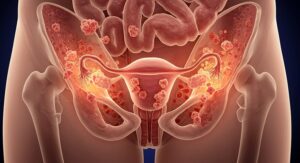
The team worked with two ovarian cancer cell lines, one of which responded to platinum-based drugs and the other of which was resistant, and exposed them to CBD, THC, or a combination of both. They also tested the compounds on healthy cells to determine whether normal tissue would be damaged.
CBD and THC Significantly Reduce the Growth of Cancer Cells
Cancer cells treated with CBD or THC formed fewer colonies, and those colonies were smaller than usual. Both compounds slowed the ability of the cancer cells to multiply, but the strongest effect was seen when CBD and THC were used together.
Although neither compound alone killed large numbers of cancer cells, the combination proved highly effective. This suggests that the two chemicals may affect cancer cells through different mechanisms and that these mechanisms may reinforce each other. “It is noteworthy that the inhibitory effect was strongest when CBD and THC were used in a 1:1 ratio,” Tong said.
Further experiments showed that the compounds reduced the migration of cancer cells, which is an important finding since metastasis is one of the leading causes of death in ovarian cancer. A therapy that limits the spread of cancer could significantly improve treatment outcomes for patients.
Potential for Less Toxic Cancer Treatments
Both cell lines responded similarly, suggesting that the compounds may work on multiple types of ovarian cancer. The cannabis-derived treatments also caused little harm to healthy cells, suggesting that future therapies based on these compounds may be more tolerable for patients than many current options.
To better understand why the compounds were effective, the researchers analyzed the signaling of the cancer cells. They found that the PI3K/AKT/mTOR signaling pathway, which is often overactivated in ovarian cancer and contributes to tumor progression and drug resistance, appeared to return to more normal activity after treatment with CBD and THC. This restoration of control may explain the reduced growth and increased cell death observed in the experiments.
Next Steps and Remaining Challenges
Despite the encouraging results, the scientists emphasize that much more research is needed before CBD or THC can be considered viable treatment options for ovarian cancer. Further studies are needed to determine whether these compounds can be used safely and effectively in clinical settings.

“Although our study is preliminary, it lays an important foundation for future research into the potential applications of CBD and THC in the treatment of ovarian cancer,” Tong said. “By confirming their anti-cancer effects and identifying important molecular mechanisms, our findings are expected to drive further preclinical research. If future studies confirm these effects, CBD-THC combination therapy could ultimately contribute to the development of new treatment strategies.”
However, this study has some limitations, according to Tong. “All experiments were conducted in vitro, so the results may not fully reflect the complexity of tumor behavior in living organisms. We did not include in vivo models and pharmacokinetic data, which are critical for determining whether CBD/THC can be used safely and effectively in clinical practice. Finally, regulatory and legal issues related to cannabinoid therapy may also influence future translational research. While the results are promising, further studies are needed before these findings can be applied to the treatment of patients.”
You may also be interested in...
-

A diagnosis of ovarian cancer can make conceiving difficult for women who want to have…
-
It is a small pill with a big responsibility. But despite its main task being…
-
Finding out you have cancer can be one of the scariest and most uncertain times…